
Geomembranes are crucial engineering materials widely used in various impermeable projects such as landfills, tailing ponds, and sewage treatment plants. A well-designed geomembrane liner system can effectively prevent pollutant infiltration and extend the service life of the project. This article will provide a detailed overview of key considerations in geomembrane liner design, including material selection, thickness requirements, environmental impact, and installation methods.
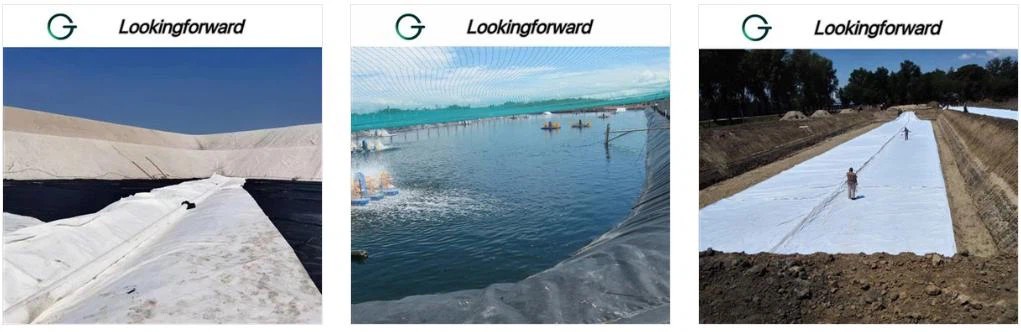
1. Material Selection
1.1 High-Density Polyethylene (HDPE)
HDPE geomembranes are widely used in various impermeable projects due to their excellent chemical resistance and mechanical properties. HDPE geomembranes have the following features:
Excellent Chemical Resistance: Can resist the erosion of most chemicals. For example, in landfill applications, HDPE geomembranes can effectively prevent harmful chemicals from seeping into groundwater.
High Tensile Strength: Can withstand significant mechanical stress, with tensile strength typically ranging from 20-30 MPa and an elongation rate between 10-15%.
Good UV Resistance: Suitable for outdoor applications, with a service life of over 20 years.
1.2 Low-Density Polyethylene (LDPE)
LDPE geomembranes are more flexible, making them suitable for projects requiring high deformation capacity, such as groundwater impermeability projects. Key features include:
Good Flexibility: Adapts to minor foundation deformations, with tensile strength of 8-15 MPa and elongation of over 200%.
Good Puncture Resistance: Performs well in underground applications, effectively resisting punctures from underground debris.
1.3 Other Materials
Other commonly used geomembrane materials include Ethylene-Vinyl Acetate (EVA) and Polyvinyl Chloride (PVC). Each material has its specific application scenarios, and the choice should be based on engineering needs and environmental conditions.
EVA: Good flexibility and low-temperature resistance, suitable for cold regions.
PVC: Excellent flexibility and puncture resistance but weaker chemical resistance, suitable for general impermeable projects.
HDPE geomembrane LDPE geomembraneCompound-geomembrane
2. Thickness Requirements
2.1 Engineering Requirements
The thickness of the geomembrane directly affects its impermeability and durability. Generally, the thicker the geomembrane, the better its puncture resistance and durability. In practical projects, the thickness should be considered based on specific impermeability needs and economic costs. Common HDPE geomembrane thickness choices are:
Landfills: Thickness of 1.5mm or 2.0mm to ensure long-term impermeability.
Tailing Ponds: Thickness of 2.0mm or greater to enhance resistance to chemical corrosion and mechanical stress.
Sewage Treatment Plants: Thickness of 1.0mm or 1.5mm to adapt to different concentrations and compositions of sewage.
2.2 Environmental Factors
Environmental conditions also significantly impact the selection of geomembrane thickness. In high or low-temperature environments, thicker geomembranes should be chosen to enhance aging resistance. In chemically aggressive environments, thicker geomembranes should be used to improve chemical resistance.
High-Temperature Environments: It is recommended to use HDPE geomembranes thicker than 2.0mm and add UV stabilizers.
Low-Temperature Environments: EVA geomembranes with a thickness of 1.5mm can be chosen to ensure low-temperature flexibility.
3. Environmental Impact
3.1 Climate Conditions
Climate conditions have a significant impact on the service life of geomembranes. In high-temperature areas, geomembranes tend to age faster and require materials with good UV resistance. In low-temperature areas, geomembranes need to have good frost resistance.
High-Temperature Climate: For example, in the Middle East, daytime temperatures can exceed 50°C, and HDPE geomembranes with UV stabilizers should be used.
Low-Temperature Climate: In regions like Siberia, Russia, where winter temperatures can drop below -40°C, EVA geomembranes are needed to ensure low-temperature flexibility.
3.2 Geological Conditions
Geological conditions significantly affect the selection and design of geomembranes. In areas with significant differential settlement, more flexible geomembrane materials like LDPE or EVA should be chosen. In foundations with sharp rocks or debris, thicker geomembranes should be used, with a protective layer underneath.
Differential Settlement: In soft soil areas, 1.5mm thick LDPE geomembranes are recommended.
Sharp Foundation: In mining areas, 2.5mm thick HDPE geomembranes with a geotextile protective layer should be used.
4. Installation Methods
4.1 Construction Preparation
Before laying geomembranes, the construction site should be cleared and leveled to ensure no sharp objects or debris on the foundation surface. For large-scale impermeable projects, the laying route and welding process of the geomembranes should be planned in advance. Generally, the following preparations are required:
Foundation Treatment: Clear the foundation surface, remove all sharp objects and debris, and ensure a smooth surface.
Laying Planning: Determine the laying sequence and direction of the geomembranes according to the design drawings, reserving sufficient seam width.
4.2 Laying and Welding
Geomembranes should be laid according to design requirements, avoiding stretching and wrinkles during laying. Hot melt welding or extrusion welding techniques should be used at the seams of the geomembranes to ensure seam sealing and strength.
Hot Melt Welding: Suitable for HDPE and LDPE geomembranes, with a welding temperature of 200-250°C and a welding speed of 2-4m/min.
Extrusion Welding: Suitable for thicker geomembranes, with a welding temperature of 220-260°C and a welding speed of 1-2m/min.
More:how-to-correctly-weld-hdpe-geomembrane
4.3 Detection and Acceptance
After laying the geomembranes, strict quality inspections should be conducted to ensure no missing welds or leaks. Common detection methods include air pressure testing, water pressure testing, and spark testing. Only after passing the inspection can the next step of construction proceed.
Air Pressure Testing: Test the sealing of welds by inflating, with a test pressure of 0.2-0.3MPa and a holding time of 5-10 minutes.
Water Pressure Testing: Test the impermeability by filling with water, with a water pressure of 0.1-0.2MPa and a duration of 12-24 hours.
Spark Testing: Suitable for thicker geomembranes, with a test voltage of 10-20kV to detect leaks.
5. Maintenance and Upkeep
5.1 Regular Inspection
After putting the geomembranes into use, regular inspections should be conducted to detect and repair any potential damage promptly. The inspection frequency should be determined based on the specific engineering situation and usage environment. Generally, a comprehensive inspection should be conducted every six months.
Inspection Content: Includes the integrity of the geomembrane surface, the sealing of seams, and the stability of the foundation.
Inspection Methods: Methods such as visual inspection, ultrasonic testing, and spark testing should be used to ensure comprehensive coverage.
5.2 Maintenance Measures
For geomembranes used outdoors, appropriate shading and protective measures should be taken to reduce the impact of UV and climate conditions. For underground geomembranes, the stability of the upper soil should be ensured to prevent foundation settlement and deformation.
Shading Measures: In high-temperature areas, shading nets or vegetation can be laid on top of the geomembranes to reduce UV radiation.
Protective Measures: In underground projects, a layer of sand or gravel protective layer should be laid on top of the geomembranes to prevent foundation settlement from damaging the geomembranes.
6. Application Case Analysis
6.1 Landfill Impermeability Project
In a large-scale landfill impermeability project, 1.5mm thick HDPE geomembranes were used for impermeability design. Through scientific material selection and construction methods, the pollution of landfill leachate was effectively prevented. The specific parameters and construction details are as follows:
Project Overview: Covers an area of 50 hectares with a design capacity of 10 million cubic meters.
Material Selection: 1.5mm thick HDPE geomembranes with tensile strength of 25MPa and elongation rate of 13%.
Construction Methods: Hot melt welding technology with a welding temperature of 230°C and a welding speed of 3m/min.
Inspection Results: Passed air pressure and water pressure tests with a test pressure of 0.25MPa and a test time of 12 hours, with no missing welds.
6.2 Tailing Pond Impermeability Project
In a tailing pond impermeability project, 2.0mm thick HDPE geomembranes were used to ensure effective impermeability of the tailing wastewater. The specific parameters and construction details are as follows:
Project Overview: Covers an area of 30 hectares with a design capacity of 5 million cubic meters.
Material Selection: 2.0mm thick HDPE geomembranes with tensile strength of 28MPa and elongation rate of 12%.
Construction Methods: Extrusion welding technology with a welding temperature of 240°C and a welding speed of 1.5m/min.
Inspection Results: Passed water pressure tests with a test pressure of 0.2MPa and a test time of 24 hours, with no leaks.
6.3 Sewage Treatment Plant Impermeability Project
In a sewage treatment plant impermeability project, 1.0mm thick LDPE geomembranes were used to ensure impermeability during the sewage treatment process. The specific parameters and construction details are as follows:
Project Overview: Covers an area of 20 hectares with a design capacity of 100,000 tons/day.
Material Selection: 1.0mm thick LDPE geomembranes with tensile strength of 10MPa and elongation rate of 250%.
Construction Methods: Hot melt welding technology with a welding temperature of 220°C and a welding speed of 3.5m/min.
Inspection Results: Passed spark tests with a test voltage of 15kV, with no leaks.
A reasonable geomembrane liner design is key to ensuring the safety and durability of impermeable projects. Through scientific material selection, thickness requirements, environmental impact analysis, and installation methods, the impermeability performance and service life of geomembranes can be significantly improved. In practical projects, the above design principles should be flexibly applied according to specific conditions to ensure the smooth implementation and long-term stability of the project.
Our factory is dedicated to the R&D and production of geomembrane products, committed to providing customers with high-quality, reliable impermeable solutions. We have advanced production equipment and strict quality control systems to ensure that each batch of products meets international standards and customer requirements. Our HDPE geomembranes have a tensile strength of up to 30MPa, an elongation rate of over 15%, and a service life of up to 25 years. Contact us to learn more about our products and application cases. Choosing us means choosing peace of mind and assurance.
Come to contact us now!