
1. Introduction: Why Repair Matters
Even with the best material and careful installation, PVC geomembrana (also called PVC geotechnical membrane or plastic waterproof liner) may experience minor damage during construction or operation - from heavy equipment, sharp stones, or weathering.
While the damage might look small, even a pinhole can cause leakage over time. That's why understanding proper repair and restoration methods is essential for maintaining long-term impermeability.
For large infrastructure projects - such as mining ponds, tailing dams, or irrigation canals - fast, standardized on-site repair can prevent costly failures and environmental impact.
2. Common Causes of PVC Geomembrana Damage
PVC geomembrana is flexible and durable, but typical causes of damage include:
Mechanical puncture - from sharp stones, metal tools, or construction debris.
Thermal expansion and contraction - long-term exposure to temperature cycles can cause stress cracks.
Improper installation or overlap tension - overstretching during installation weakens the material.
UV exposure and aging - if uncovered for long periods, ultraviolet radiation can embrittle the surface.
Human error - welding temperature too high or low, or accidental tearing during inspection.
Identifying the root cause is the first step to effective repair.
3. Step-by-Step Guide: How to Repair PVC Geomembrana On Site
Step 1: Inspection and Damage Assessment
Mark the damaged area clearly using chalk or marker.
Clean the surrounding surface with soft cloth and remove dust, sand, or grease.
Measure the size and depth of the defect:
Pinholes: <2 mm
Tears: 2–100 mm
Large punctures or missing material: >100 mm
Based on the severity, choose the proper repair technique (see below).
Step 2: Surface Cleaning and Preparation
PVC geomembrana requires a clean, dry, and smooth surface for successful welding or patch bonding.
Use a mild detergent or isopropyl alcohol to remove contaminants.
Dry completely before proceeding.
Lightly roughen the surface (if old or weathered) using fine sandpaper to improve adhesion.
Avoid using solvents like acetone that might soften the membrane excessively.
Step 3: Repair Methods According to Damage Type
1. Small Holes or Pinhole Leaks (<2 mm)
Heat the area gently using a hot-air gun (200–250 °C) until the PVC slightly softens.
Use a hand roller to press and seal the softened area firmly.
Cool naturally - do not pour water or use fans.
2. Tears or Punctures (2–100 mm)
Cut a PVC patch of the same material, thickness, and color.
Patch size should be at least 10 cm larger than the damaged area on all sides.
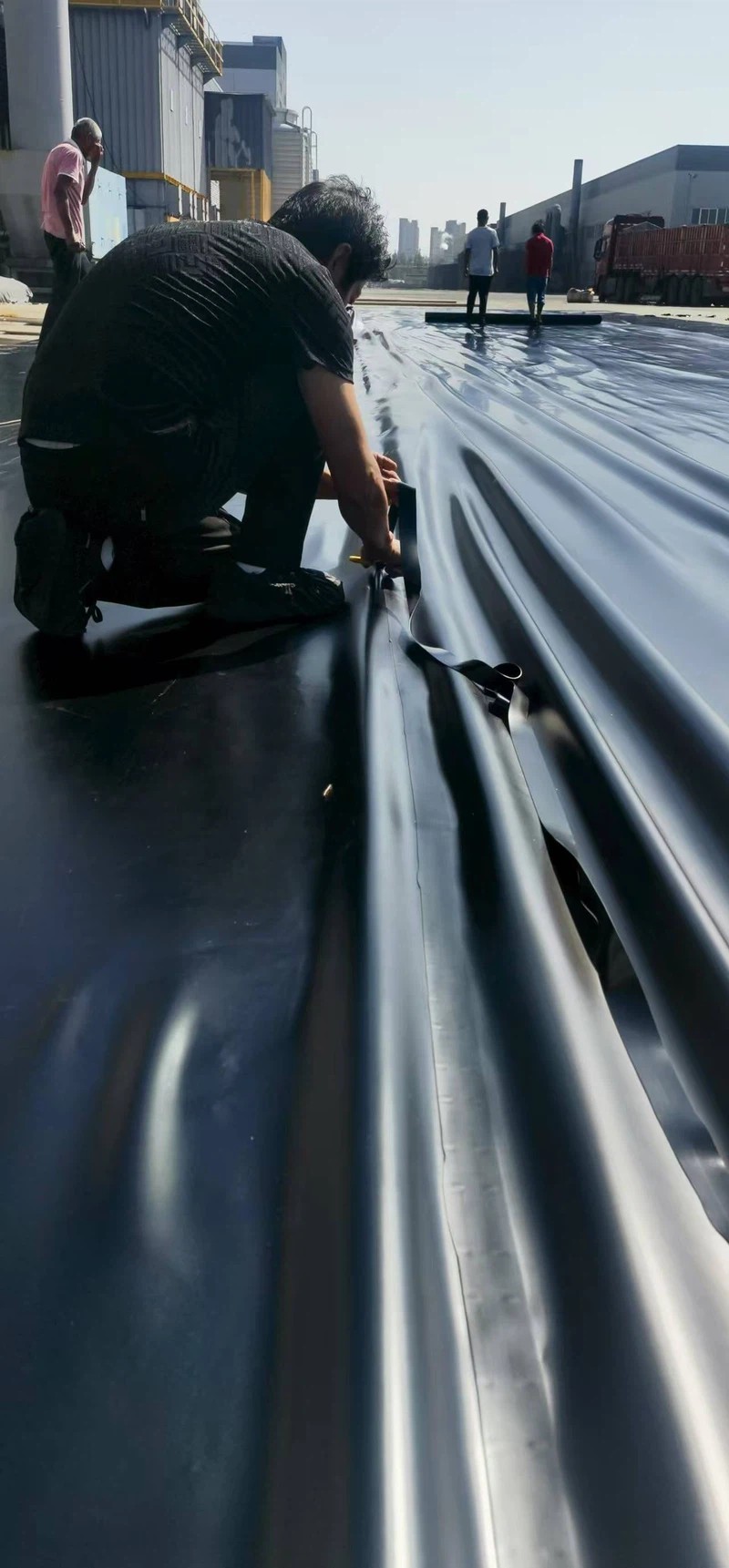
Overlap the patch and base surface, then weld using hot wedge or extrusion welding.
Roll firmly to remove trapped air and ensure full contact.
3. Large Holes or Missing Segments (>100 mm)
Cut out irregular edges to form a smooth circular or oval repair zone.
Insert a new piece of PVC geomembrana with at least 15 cm overlap around all sides.
Weld continuously along the edge with a dual-track weld to ensure airtight sealing.
Test the repaired seam using vacuum testing or air pressure testing.
Step 4: Extrusion Welding for Precision Repair
For detailed repairs around pipes, corners, or complex structures, extrusion welding is recommended.
Temperature: 220–250 °C
Filler rod: PVC welding rod (same resin type as base material)
Technique: Slowly feed the rod into the joint using an extrusion gun while applying pressure.
Finishing: Smooth the surface using a small roller while hot to ensure fusion.
Extrusion welding provides a permanent, homogeneous repair identical in strength to the original liner.
4. Post-Repair Quality Inspection
After welding or patching, always conduct integrity tests:
Visual inspection – No burns, bubbles, wrinkles, or edge lift.
Vacuum test – Apply soap solution over the weld and cover with vacuum bell; hold for 5 minutes. If no bubbles appear, the seal is tight.
Air pressure test – For dual-track welds, pressurize the air channel to 0.2 MPa for 5 minutes.
Peel and shear test – Cut small test samples if necessary; the weld should achieve ≥90% of the original tensile strength.
All test results should be logged as part of the project's quality documentation.
5. Environmental and Safety Considerations
When repairing PVC geomembrana, always maintain safety standards:
Avoid welding during rain or high wind.
Use PPE (gloves, goggles) to prevent burns from hot equipment.
Collect all scrap materials; PVC fragments should not enter soil or water.
For projects in sensitive areas (mining ponds, tailings), isolate the damaged section before repair to prevent contamination.
Many Chinese PVC geomembrana manufacturers also provide on-site supervision or video guidance for overseas clients, ensuring proper technique even under field conditions.
6. Preventive Measures: Minimizing Future Damage
To reduce the risk of damage and repairs:
Add a protective geotextile layer under and above the membrane.
Limit heavy equipment traffic on exposed surfaces.
Cover with sand or soil as soon as possible after installation.
Regular inspection schedule: every 3–6 months in high-stress areas.
Train local operators on emergency patching and seam testing.
These preventive actions save time and cost over the lifespan of the project.
7. Long-Term Maintenance Strategy
PVC geomembrana systems typically last 25–30 years if well maintained.
A robust maintenance plan includes:
Routine inspections after heavy rain or temperature fluctuations.
Periodic re-welding of aging seams if minor cracks appear.
Storage of spare PVC rolls for emergency repairs.
Annual technical audit by qualified geomembrane specialists.
With proper monitoring, repaired sections can perform just as well as new installations.
8. Conclusion
Repairing PVC geomembrana is a critical yet straightforward process when done correctly.
From pinholes to large tears, proper cleaning, patching, and welding restore waterproof integrity quickly and reliably.
As a professional PVC geomembrana manufacturer in China, we not only produce high-quality membranes but also provide global technical support and on-site repair training to ensure lasting protection in every project.
A well-maintained geomembrane system is not just a layer of plastic - it's your project's safeguard against environmental leakage for decades.