What Is Gabion?


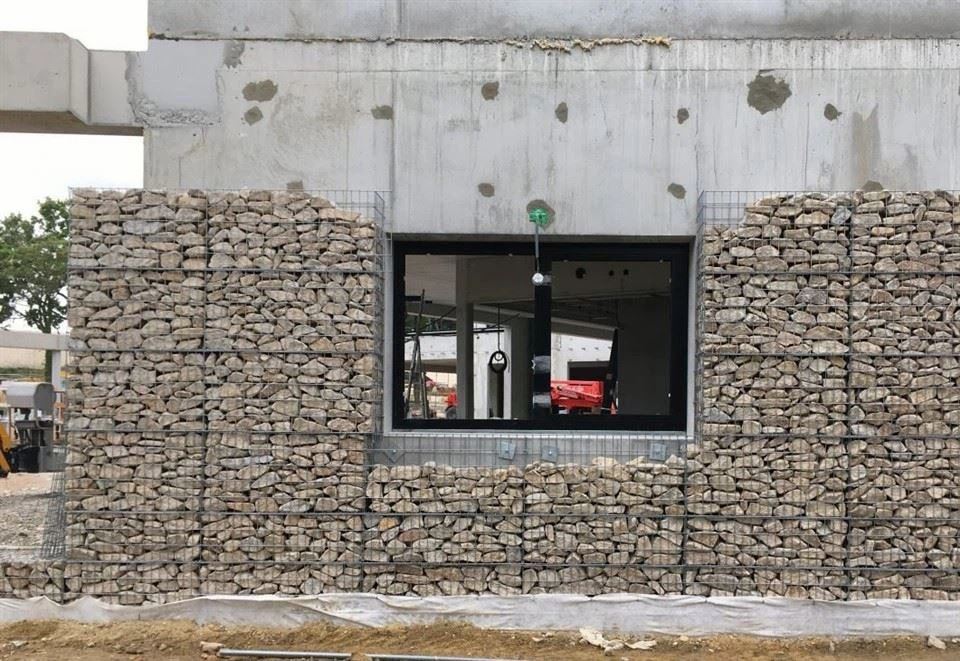
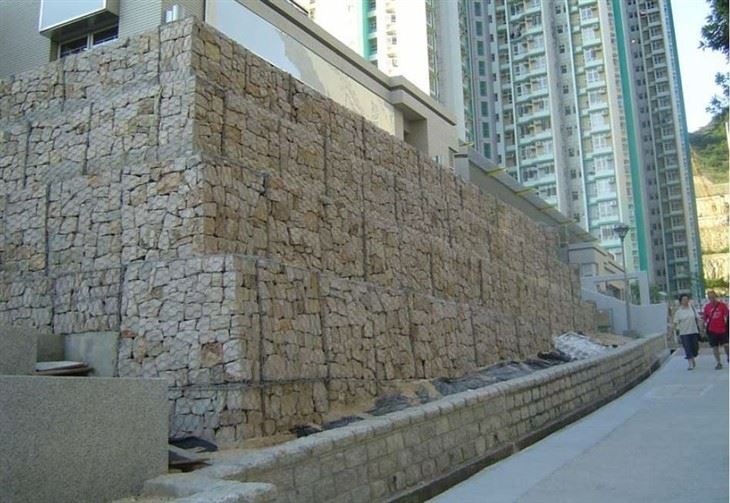
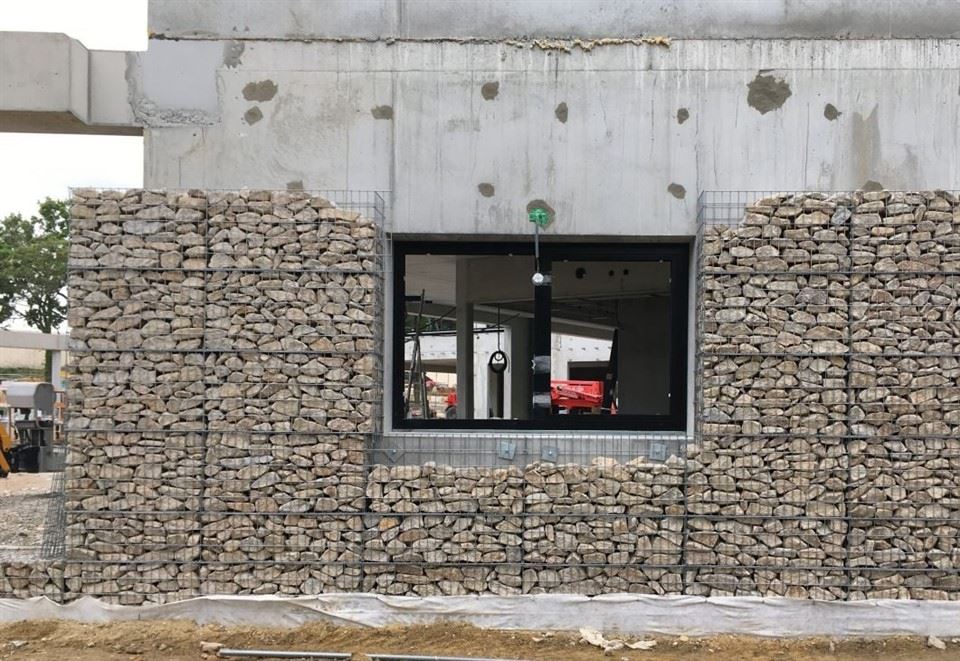
Gabion is a welded wire cage or box filled with materials such as stone, concrete, sand, or soil. So, gabion is a partially flexible block construction used for slope stability and erosion protection in construction. Various types of gabions are constructed and used in different engineering constructions.


Advantages of Gabion


Erosion control: Gabions are highly effective in preventing soil erosion. Their porous structure allows water to flow through while trapping soil, reducing the impact of heavy rain or water runoff on slopes and embankments.


Sustainability: Gabions are an eco-friendly choice. They utilize natural stone materials and do not require the use of chemicals or other harmful substances. They can also be reused, making them a sustainable option for the environment.


Durability: Gabions are incredibly durable and have a long lifespan. They can withstand harsh weather conditions, including freezing temperatures and intense heat, making them ideal for various climates.


Versatility: Gabions can be used for a wide range of purposes, from retaining walls and landscaping features to bridge abutments and embankment protection. They are flexible and adaptable to the specific needs of your project.


Low maintenance: Once installed, gabions require minimal maintenance. There’s no need for painting, sealing, or regular upkeep, making them a cost-effective choice in the long run.


Aesthetic appeal: The natural look of gabions with the combination of rocks and wire mesh can enhance the visual appeal of your landscaping. They can be designed to blend seamlessly into the surrounding environment.


Why Choose Us


Our factory
Our company is a Chinese company that provides anti-seepage solutions, products, and services for geosynthetics.


Overseas Cooperation
The company has established a global marketing network and established cooperative relationships with many overseas customers, enabling it to provide customers with high-quality services efficiently and conveniently.


Quality Assurance
In terms of quality assurance, the company strictly follows the standards and norms of the industry quality system. Adopt industry-leading testing equipment to ensure product quality and good reputation.


OEM/ODM
When you put forward your needs, our engineers will provide you with faster and more perfect customized solutions. We have a wide range of products, and we will provide technical support according to your actual needs to choose the right product for you.


Professional Service
We can accept factory inspection and cargo inspection at any time. New product research and development is carried out by professional personnel and comprehensive after-sales services are provided.


Types of Gabion

Gabion baskets
It is a net wire mesh that produced in box-shaped and in different sizes.Used in highway and railway works.


Gabion mattresses
Gabion mattresses have shorter heights than other types of measurements and are used for channel coating to prevent erosion. Hence, it can handle the velocities caused by waves and erosion.Common size, 6 m long by 2 m wide by 0,3 m high.

Gabion sacks

This type of gabions is formed quickly.It has a porous and flexible structure.Gabion sacks are usually used in hydraulic works in emergency conditions.

Gabion wire mesh

It is utilized to keep the possible rock and stone fall on the highway and railway surfaces.Gabion wire mesh maintains stability of the slope close to highway and railways. It is applied for anti-erosion to slope.It enhances embankment soil strength in combination with geogrid reinforcement.

Decorative gabion elements

It is used indoor and outdoor decoration, garden design and landscaping. Gabion elements offer suitable environment for the growth of plant roots.


Application of Gabion

Retaining walls

Gabions are commonly employed in the construction of retaining walls to stabilize slopes and prevent soil erosion. Their flexibility allows for adaptation to varying terrain conditions, making them suitable for both residential and commercial projects.

Channel lining

Gabions serve as effective solutions for lining channels and riverbanks to mitigate erosion and protect against scouring. They withstand hydraulic forces while promoting natural water flow and habitat restoration.

PVC防水卷材
PVC防水卷材

Flood control

During flood events, gabions act as temporary or permanent barriers to contain floodwaters and minimize damage to infrastructure and properties. Their permeable design reduces hydrostatic pressure and prevents localized flooding.

Landscaping features

Gabions add aesthetic appeal to landscapes by incorporating natural stone elements into garden borders, seating areas, and decorative walls. Their texture and color variations complement outdoor environments and enhance visual interest.


Material of Gabion
 
Galvanized steel gabion

These gabion are constructed of either welded steel wire mesh or double twisted wire mesh that is hot dipped galvanized. Galvanized gabion show excellent results for protection against general exposure and are the most common type. Galvanized protection on gabion wires from zinc has proven to be an excellent general purpose option with its inherent corrosion resistance. They tend to have a useful life of around 25 years on average.

PVC coated galvanized steel gabion

PVC coated gabion can be either welded wire mesh or double twisted woven mesh gabion. In both cases the steel core wires are fuse bonded with PVC coating after hot-dip galvanizing and applying primer. They make solid and rigid structures by providing excellent protection in extreme environments. The PVC coating layer provides added protection for use in environments where soil or water is acidic or polluted. The protective coating prevents the risk of corrosion and is ideal for retaining and erosion applications in freshwater.

Stainless steel gabion

Without the need for any extra process, stainless steel gabion have great natural features and are available in both 304 and 316l stainless steel. Aesthetically, stainless steel gabion easily incorporate with architectural designs and are available in a range of wire diameters and mesh sizes depending on the aesthetic preference and the material that will be used as fill. They’re fire-resistant and don’t require extensive care. They are resistant to corrosion or rust throughout the wire instead of just having a coating on the exterior of the wire. For applications around the ocean or highly corrosive soil, marine-grade stainless steel gabion materials can greatly improve the project life but it should be mentioned all steel when exposed to saltwater for extended periods of time will eventually rust.

Polypropylene plastic gabion

In contrast to conventional steel wire gabion, these UV-stabilized polypropylene gabion are a more affordable option that gives you long-term durability while allowing for flexibility in rough or uneven areas. Pp marine gabion are non-reactive for the marine environment and are treated to maintain UV resistance. Pp marine gabion are ideal for bodies of water where wave energy dissipation is needed to reinforce the shoreline. They also help in scour-protection and maintaining the integrity of structures close to the shoreline.

Raw steel gabion

Raw steel gabion are cheap and readily available. While the patina they develop is very attractive due to the lack of coating on the steel the life span can be greatly dimenished depending on the severity of the environmental conditions. That is why these gabion are generally used in arid conditions or in applications where they are not exposed to large amounts of moisture.


How to Choose a Gabion

Four main factors in choosing gabions 


Application
Generally, we have both double twisted gabion baskets and welded gabion baskets, which are produced by different production processes and are applied to different situations. Here we list their common applications. You can choose the right gabion basket according to your specific application.
Double twisted gabion basket
Double twisted gabion basket refers to a rectangular box with double-twisted or triple-twisted hexagonal mesh fabric made of galvanized wire, pvc wire, or galfan wire. It has been successfully used in a variety of applications including retaining walls, river banks, slope protection, channel linings, dams and culverts, etc.
Welded gabion basket
Made of galvanized steel wire or galfan wire, welded gabion basket generally has a solid structure, a durable service life and provides higher strength. It is commonly used in engineering constructions and architectural decorations like garden landscaping, trapezoidal gabion walls, interior decorations, gabion fireplaces and building facades.


Material
Gabion baskets are generally made of galvanized steel wire, galfan steel wire and pvc coated wire. These materials have their own unique advantages; you can choose the right material according to their characteristics.


Structure
In addition to gabion boxes, we also have a similar product – gabion mattress . Similar like gabion boxes, gabion mattresses are divided into double twisted gabion mattresses and welded gabion mattresses, which are widely used in hillsides, river linings, bridge protection and river bank erosion applications.
Its main difference from gabion boxes is that the gabion mattress is relatively lower in height. Generally, it is 0.15 m, 0.17 m, 0.23 m, 0.3 m, and 0.5 m in height and presents a flat structure, which offers more stability. The gabion box is generally 1 m in height. You can choose corresponding products according to your application. For example, you can choose gabion mattresses for river bank slope protection as its flat structure provides more stability; you can choose gabion boxes for river bank elevation & reinforcement due to its height.


Size
Opening size
You can choose the opening size according to the size of stones to be filled in gabion baskets.
Standard size
Double twisted gabion basket: 60 mm × 80 mm, 80 mm × 100 mm and other customized sizes.
Gabion basket: 76.2 mm × 76.2 mm and other customized sizes.
Gabion basket size
We need to determine the length, width, and height of the gabion basket according to its actual application scene.
Standard sizes: 3 × 1 × 1 m, 2 × 1 × 1 m, 1 × 1 ×1 m and other customized sizes.


How to Install The Gabion
PVC防水卷材
 

Foundation preparation

The foundation on which the gabions are to be placed shall be cut or filled and graded as required. Surface irregularities, loose material, vegetation, and all foreign matter shall be removed from foundation surface area. Gabions and bedding or specified geotextiles shall not be placed until the foundation preparation is completed, and the subgrade surfaces have been inspected and approved by the engineer or the engineer’s representative. Compaction of bedding or filter material will be required per plans and specifications. The surface of the finished material shall be to grade and free of mounds, dips or windrows. Extra care should be taken with foundation preparations in order to ensure a level and smooth surface. Geotextile shall be installed in accordance with the requirements of the plans and specifications.

PVC防水卷材
 

Assembly

The assembly and placement of gabions shall be in accordance with the following procedures: Assembly. Rotate the gabion panels into position and join the vertical edges with fasteners for gabion assembly. Where spiral fasteners are used, crimp the ends to secure the spirals in place. Where c ring type alternate fasteners are used for basket assembly, install the fasteners at a maximum spacing of 150 mm. Use the same fastening procedures to install interior diaphragms where they are required. Interior diaphragms will be required where any inside dimension exceeds 1m for gabion baskets. Diaphragms will be installed to assure that no open intervals are present that exceeds 1m.

PVC防水卷材
 

Placement

Place the empty gabions on the foundation and interconnect the adjacent gabions along the top, bottom, and vertical edges using spirals or c rings.
Modular assembly
Gabion cages can be built in a modular method by eliminating an end panel for each cage so no two panels need be connected together. The same method may also be used for successive courses including lid and base panels. Interconnect each layer of gabions to the underlying layer of gabions along the front, back, and sides.

PVC防水卷材
 

Filling operation

After adjacent empty wire gabion units are set to line and grade and common sides properly connected, they shall be placed in straight-line tension to gain a uniform alignment. Staking of the gabions may be done to maintain the established proper alignment prior to the placement of rock. No temporary stakes shall be placed through geotextile material. Connecting lacing wire and other fasteners (as allowed) shall be attached during the filling operation to preserve the strength and shape of the structure.

Internal connecting cross-tile (stiffener) wires shall be placed in each unrestrained gabion cell, including gabion cells left temporarily unrestrained. Two internal connecting wires shall be placed concurrently with rock placement, at each 300 mm interval of depth. In welded mesh gabions these cross ties or stiffeners will be placed across the corners of the gabions (at 300 mm from the corners) providing diagonal bracing. Lacing wire or preformed wire stiffeners may be used.

The gabions shall be carefully filled with rock, either by machine or hand methods, ensuring alignment, avoiding bulges, and providing a compact mass that minimizes voids. At no point in the filling process may rock be mechanically placed from a height of over 1m from machine to fill area. Machine placement will require supplementing with handwork to ensure the desired results. The cells in any row shall be filled in stages so that the depth of rock placed in any one cell does not exceed the depth of rock in any adjoining cell by more than 300 mm. Along the exposed faces, the outer layer of stone shall be carefully placed and arranged by hand to ensure a neat, compact placement with a uniform appearance.

The last layer of rock shall be uniformly leveled to the top edges of the gabions. Lids shall be placed over the rock filling using only approved lid closing tools as necessary. The use of crowbars or other single point leverage bars for lid closing is prohibited due to the potential for damage to the baskets.

The gabion lid shall then be secured to the sides, ends, and diaphragms with spiral binders, approved alternate fasteners, or lacing wire wrapped with alternating single and double half hitches in the mesh openings.


Our Factory


202407251705527ff90.jpg (427×281)


Our company is a Chinese company that provides anti-seepage solutions, products, and services for geosynthetics. Its main application areas include the landfill, storage, and management of solid, liquid, and gaseous hazardous waste in mining, petrochemicals, reservoirs, roads, tunnels, and aquaculture. The company's S team was established in 2002; The International Trading Company was established in 2023. For 21 years, we have been committed to producing and developing innovative geosynthetic anti-seepage products. The main products of the company are geotextile membrane, Geotextile, geogrid, geocell, geotextile composite drainage network, geotextile composite clay lining and other geotextile products.

20240725171754e6093.png (668×500)

202407251711055f2da.png (900×854)


FAQ


Q: What is the purpose of gabions?

A: A gabion is a type of wired basket filled with various rocks or soil that helps prevent erosion, retain a slope, or provide a landscape element. They are commonly used in streambanks and areas with steep slopes.

Q: What is gabions weakness?

A: Corrosion and abrasion by bedload movement, floating large wood and winter ice enhanced failure of gabion structures by breaking wire at the base of walls. Gabions with broken wires often spilled their rock fill and lost their structural integrity.

Q: How long do gabions last?

A: Gabions are designed to be used in permanent structures but their longevity is directly related to the environment they are installed in. This means life expectancy of gabion walls can be anywhere from 10 to 75 years depending on the install environment.

Q: Are gabions permanent?

A: The life expectancy of gabions depends on the lifespan of the wire, not on the contents of the basket. The structure will fail when the wire fails. Galvanized steel wire is most common, but PVC-coated and stainless steel wire are also used. PVC-coated galvanized gabions have been estimated to survive for 60 years.

Q: Are gabions bad for the environment?

A: Gabions are made of natural resources, which helps to make them an eco-friendly choice for many applications. Gabions are made of rocks, which are plentiful and renewable; there is no need for costly construction materials, as rocks can be taken from areas nearby.

Q: Do I need a foundation for a gabion?

A: Most gabion retaining walls don't need concrete foundations.Depending on the wall height, a 50mm to 100mm layer of compacted 40mm MOT Type 1 sub base, crushed from either granite, limestone of clean crushed concrete, is all that is required for most gabion walls.

Q: What do gabions stop?

A: Gabions are commonly used to construct a wall to prevent erosion. The individual cages are often seen stacked on top of each other at the side of motorways to prevent rocks from falling onto the road. They are also used to stop erosion alongside river banks.

Q: Do gabions need maintenance?

A: Versatility: Gabions can be used for a wide range of purposes, from retaining walls and landscaping features to bridge abutments and embankment protection. They are flexible and adaptable to the specific needs of your project. Low Maintenance: Once installed, gabions require minimal maintenance.

Q: What is the cheapest way to fill a gabion?

A: Block Filling - a cost-effective way of following your gabion baskets is by using rubble bags to fill the back of the gabions that are not on show. You then add the decorative stones to the front, facing the panels with the flat side of the rocks.

Q: What do you put under gabion?

A: Geotextiles are fabrics made of synthetic or natural fibres. They are designed to be permeable to water and air, and they are placed between the gabion baskets and the surrounding soil to provide additional support and stability. Geotextiles offer several benefits when used in gabion structures.

Q: Are gabions load bearing?

A: They're aesthetically pleasing, durable, and load-bearing. That's right, gabion walls can not only act as a retaining wall or be used to form features like a terrace or bench but can also serve as an effective load-bearing wall.

Q: Can you fill gabion with soil?

A: Line the gabion with a sheet of plastic. Fill the gabion with soil. Pack the soil tightly to create a firm surface. Place a piece of wood or stone on top of the packed soil to create a seat.

Q: How do I stop my gabions from bulging?

A: Choose interlocking rocks to achieve straight edge finish. Try to position the flat surfaces of rocks against the basket walls. Place the rocks manually in the cage to ensure straight edges and have a better control over organising the stones.

Q: Are gabions easy to install?

A: Gabion baskets are commonly sold in flat packs which are lightweight and easy to assemble. All there is required to do when assembling gabions is to prepare the ground, fasten the baskets together and fill the baskets with your desired material.

Q: Can you put bricks in gabion baskets?

A: You can always use loose building material that you may have lying around, like bricks.

Q: Do gabions prevent flooding?

A: If you need river bank and flood protection, to prevent you land eroding away, gabions are a low cost method of flood protection. Building a flood control wall with gabions keeps the erosion protection systems cost down.

Q: What is the standard size of a gabion?

A: Traditionally twisted mesh gabions have been: 3', 4.5', 6', 9', and 12' in length; 3' and 4.5' in width; and 1',1.5', and 3' in height.

Q: How do you calculate gabions?

A: Calculate Gabion Cage Volume.Multiply the length, width, and height of your gabion basket to find its volume in cubic meters.

Q: What size stone is used for gabions?

A: The size of the stones for gabions are from 70 to 400 millimeters. Again, depending on the project, gabions filled with stones can be the same or different sizes.

Q: How to hide gabion?

A: Fill with Alternative Materials.Some people fill them with large seashells, pieces of coloured glass, or different types of rock to give it a new look. You don't need to do the entire gabion this way, though, you can fill the front-facing side with your more beautiful materials and then add the stone behind it.

We're well-known as one of the leading gabion manufacturers and suppliers in China. If you're going to buy high quality gabion at competitive price, welcome to get more information from our factory.

commercial drainage cell, retaining wall drainage cell, water feature drainage cell