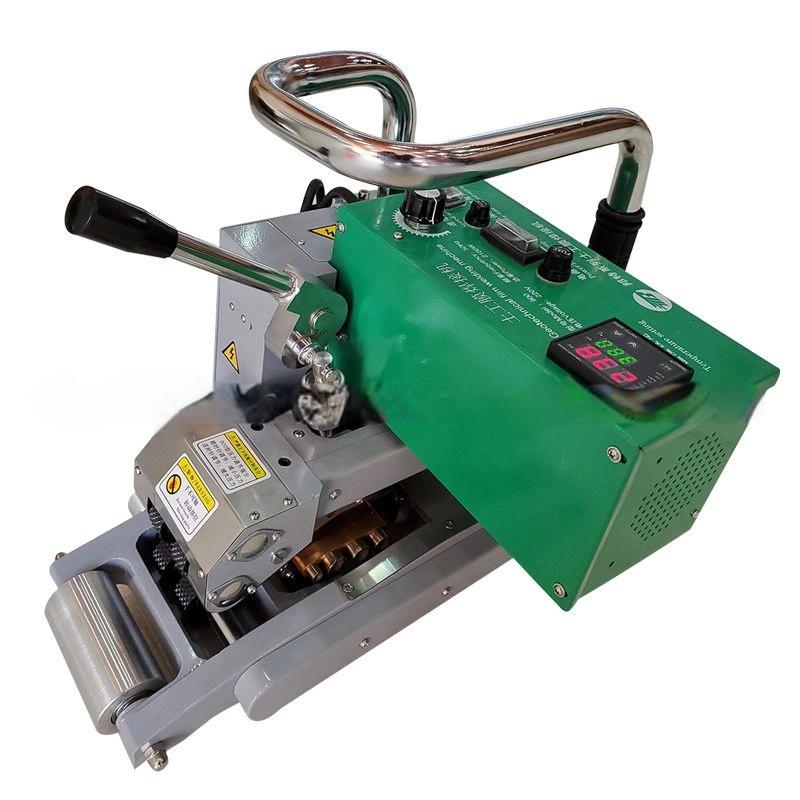
What Is Geomembrane welding machine?


Geomembrane welding machine is a special equipment used to weld the interface of geomembrane to ensure the firmness and sealing of the joint. It is one of the commonly used equipment in geotechnical engineering. The geomembrane welder uses heat and pressure to weld two layers of geomembrane to form a sealed weld. The welded geomembrane has good anti-seepage properties and can prevent the penetration of moisture, liquid or gas, thus playing the roles of isolation, waterproofing, protection and protection.


Advantages of Geomembrane welding machine


Temperature control
During the welding process, the geomembrane welding machine can control the heating temperature to ensure that the surface of the geomembrane reaches the melting point, thereby achieving welding.


Pressure control
The geomembrane welding machine is equipped with a pressure system that can apply appropriate pressure to make the geomembranes in close contact to ensure the quality and strength of the weld.


Versatility
Geomembrane welding machines usually have a variety of welding modes and parameter selections, which can adapt to different types and specifications of geomembranes. It can realize the welding of geomembranes of different widths and thicknesses, and has strong adaptability.


Efficiency
The geomembrane welding machine has the characteristics of high speed and high efficiency, and can complete the welding task of large area geomembrane in a short time.


Stability
The geomembrane welding machine adopts advanced technology and design, with stable performance and working status. It can maintain stable welding effects under different working conditions and adapt to different construction environments and requirements.


Why Choose Us


Our factory
Our company is a Chinese company that provides anti-seepage solutions, products, and services for geosynthetics.


Overseas Cooperation
The company has established a global marketing network and established cooperative relationships with many overseas customers, enabling it to provide customers with high-quality services efficiently and conveniently.


Quality Assurance
In terms of quality assurance, the company strictly follows the standards and norms of the industry quality system. Adopt industry-leading testing equipment to ensure product quality and good reputation.


OEM/ODM
When you put forward your needs, our engineers will provide you with faster and more perfect customized solutions. We have a wide range of products, and we will provide technical support according to your actual needs to choose the right product for you.


Professional Service
We can accept factory inspection and cargo inspection at any time. New product research and development is carried out by professional personnel and comprehensive after-sales services are provided.


Types of Geomembrane welding machine


Hot wedge geomembrane welding machine

Geomembrane welding machines employ a heated wedge to melt the surfaces of geomembrane liners. Fusion welding involves positioning a self-propelled hot wedge or hot air welder between two overlapping panel edges. The welders heat and melt the surface, followed by compressing the material between two rollers to create a fusion weld through the combination of heat and pressure. Hot wedge welding machines are the prevalent choice for geomembrane installation.


Extrusion liner welding machines

Extrusion geomembrane welding machines, in conjunction with welding rods, are ideal for creating welded joints. These machines utilize a heated extruder to melt the surfaces of geomembranes, followed by extruding the molten welding rod to form a strong joint. The melted welding rod effectively fuses the geomembrane joints together. Extrusion fillet welding involves extruding a bead of molten welding rod along the edge of one panel overlapped with another. This process ensures homogeneous bonding between the geomembranes by causing their melting. It is essential to use a welding rod compatible with the geomembrane liner material.


Hot air geomembrane welding machines

Hot air geomembrane welding machines utilize hot air flow to heat and melt the geomembrane surface, which is then pressed together to form a strong and uniform seam. This method is versatile and suitable for smaller projects, although it has a slower welding speed and higher workload compared to hot wedge welding machines. However, it offers a simple and lightweight operation.


Geomembrane Welder


Application of Geomembrane welding machine

Public works

Building foundation geomembranes

Subway tunnels

Mine waterproof lining

Reservoirs

Irrigation ditches

Dam anti-seepage membranes

Aquaculture ponds

Swimming pool linings

Garbage landfill sites

Waste liquid discharge tanks


How to Maintain Geomembrane welding machine

Cleaning equipment: Remove remaining plastic residue, dust, etc.


Check components: Such as rubber wheels, steel wheels, etc. for damage.


Storage environment: The equipment should be placed in a dry, non-corrosive gas place steadily.

Geomembrane Welder


How to Choose a Geomembrane welding machine


Project requirements:
Assess the specific needs of the project, such as the size of the geomembrane area, complexity of the terrain, and required welding speed.Match the machine's capabilities to the project's demands to ensure efficient and effective welding.


Welding technique:
Determine the most suitable welding method (hot air, thermal wedge, dual track, or automated) based on the project's requirements and constraints.Evaluate the advantages and limitations of each welding technique to select the optimal solution.


Weld quality:
Consider the machine's ability to produce consistent, high-quality welds that meet the necessary standards and specifications.
Look for features that ensure uniform temperature, pressure, and seam formation.


Productivity and efficiency:
Evaluate the machine's welding speed and productivity to match the project's timeline and labor requirements.Automated or dual-track machines may offer higher efficiency for large-scale projects.


Ease of use and maintenance:
Prioritize machines with user-friendly controls, ergonomic design, and straightforward maintenance procedures.This can improve the crew's training, productivity, and overall satisfaction.


Durability and reliability:
Ensure the machine's construction and components can withstand the rigors of field use and provide long-lasting performance.Look for a machine with a proven track record of reliability and minimal downtime.


Safety features:
Verify that the machine incorporates appropriate safety mechanisms to protect the operators and comply with relevant regulations.


How to use the geomembrane welding machine
 

Preparation
Before starting the welding process, take the following steps:
Ensure you have the necessary safety equipment, including gloves and goggles, to protect yourself during the operation.
Inspect the welding machine to ensure it is in proper working condition and all components are securely connected.
Clean and prepare the surfaces of the geomembrane that will be joined. Remove any dirt, debris, or moisture to ensure a clean and solid weld.


Machine setup
Set up the geomembrane welding machine according to the specific requirements of your project:
Adjust the temperature and speed settings on the welding machine based on the type and thickness of the geomembrane material you are working with. Refer to the manufacturer’s guidelines for recommended settings.
Make sure the heating element and pressure rollers of the welding machine are properly aligned to ensure even heat distribution and pressure during the welding process.


Welding process
Follow these steps to perform the actual welding:
Position the geomembrane sheets to be joined, ensuring they overlap with the desired welding area. The overlap width should typically be determined based on the thickness of the geomembrane material.
Start the welding machine and allow it to heat up to the set temperature. This may take a few minutes depending on the specific machine.
Place the heating element between the overlapping geomembrane sheets, applying even pressure to ensure good contact.
Move the machine along the welding seam, maintaining a consistent speed. The speed should be adjusted to allow sufficient heating and fusion of the geomembrane layers. Keep the machine moving smoothly to avoid overheating or insufficient fusion.
Continue welding along the seam until the desired length or area is joined. Ensure that the weld is continuous and free from any gaps or defects.


Inspection and finishing
After completing the welding process, perform the following checks:
Visually inspect the weld for any defects, such as incomplete fusion, air pockets, or irregularities. If any issues are identified, rework the affected area.
Test the strength of the weld by gently pulling on the joined geomembrane sheets. The weld should hold firmly without any signs of separation or weakening.
Trim any excess material from the welded area if necessary, ensuring a neat and tidy finish.
It is crucial to note that the specific instructions for using an geomembrane welding machine may vary depending on the model and manufacturer. Always refer to the user manual and guidelines provided by the manufacturer for detailed instructions, safety precautions, and recommended settings. If you are unfamiliar with the process or using the machine for the first time, consider receiving proper training or seeking professional assistance to ensure accurate and efficient welds.


Safety Precautions When Using the Geomembrane welding machine
 

Electrical equipment and power lines should meet the requirements of relevant professional specifications.


The power cords towed by hot air equipment, grinding machines, and welding machines must be kept away from their working parts during use, so as to avoid damage to the brain wires and leakage of electricity.


Except for hot air welding, the mouth of the hot air equipment must not be in contact with the HDPE film surface under any circumstances and should be kept as far away as possible from the film surface, human body, machinery, and other objects.


When the welding machine is not in use, it should not be placed directly on the HDPE film surface but should be placed on a bracket or sandbag belt.


After the film cutting knife is used, the blade should be immediately returned to the knife box.


All kinds of temporary small tools used in the field should be put into the toolbox in time after use.


It is strictly forbidden to directly discard the solder material removed from the torch head of the extrusion welding machine on the surface of the geomembrane.


All activities that may damage the finished geomembrane are not allowed.


Our Factory


202407251705527ff90.jpg (427×281)


Our company is a Chinese company that provides anti-seepage solutions, products, and services for geosynthetics. Its main application areas include the landfill, storage, and management of solid, liquid, and gaseous hazardous waste in mining, petrochemicals, reservoirs, roads, tunnels, and aquaculture. The company's S team was established in 2002; The International Trading Company was established in 2023. For 21 years, we have been committed to producing and developing innovative geosynthetic anti-seepage products. The main products of the company are geotextile membrane, Geotextile, geogrid, geocell, geotextile composite drainage network, geotextile composite clay lining and other geotextile products.

20240725171754e6093.png (668×500)

202407251711055f2da.png (900×854)


FAQ


Q: What is geomembrane welding?

A: Geomembrane welding is a crucial process used in the installation and construction of geosynthetic liners for various applications such as landfill liners, mining ponds, agricultural reservoirs, and other environmental containment systems.

Q: What are the regular maintenance tasks on welding equipment?

A: This includes the following routine practices: Disconnect all of the power units and blow out or vacuum the machines interior at least once every six months. Check and clean (with a wire brush) the wire feeder and drive rolls (replacing if necessary) at least once every three to four months.

Q: What is the geomembrane welding technique?

A: Hot-Air Welding.This welding technique suits all known geomembranes, including PVC, Urethane, HDPE, Polypropylene, and LLDPE. The two overlapping geomembrane layers' interface is exposed to heated air that softens their surfaces, which are then pressed together to form a strong bond.

Q: Do welding machines need serviced?

A: Long term, you will want to have a qualified technician check inside the machine for buildup of dirt, dust and grime on cooling fans, wiring, transformers and PC boards. Servicing the machine in this way will help to cool the components and prolong the service life of the unit..

Q: What is poor quality of welding?

A: A poorly executed weld can lead to water, chemical or gas leaks, which entail risks of varying seriousness depending on the nature of the product. These risks can range from excess water consumption through to contamination of an entire site, not to forget the risks of explosion or fire.

Q: What happens if you overheat a weld?

A: If the weld is made with too much heat we could destroy the chemistry of the base material. If the metal has prior heat treating history welding can have major effects. If the weld is made correctly, with the proper filler metal, it should meet or exceed the strength of the base material.

Q: What temperature do welds fail?

A: Beyond 400 °C up to 800 °C heating temperature, welds lose ultimate strength rapidly. The yield stress of steel welds decreases faster than that of structural steel at 450–800 °C. Electrode type has a great effect on strength characteristics, failure mode and microstructure of weld metals in fire.

Q: How to clean a welding machine?

A: Use a soft cloth, a brush, or compressed air to wipe, scrub, or blow off the dust, dirt, grease, oil, spatter, slag, and other contaminants from the external and internal surfaces of your welding equipment. Be careful not to damage or dislodge any parts or wires while cleaning.

Q: What is the strength of the geomembrane?

A: Consider that the breaking load of the geomembrane is a function of the cross sectional area of the seam specimen, typically 25 mm wide by, for example, 2.5 mm in thickness, or 62.5 mm2. Therefore, with a yield strength of 14 MPa the geomembrane will yield at a load of 35 kN/m.

Q: What is the difference between geomembrane and HDPE?

A: Some of the major differences between the two materials are: PVC geomembranes are flexible and relatively easy to handle, while HDPE Geomembranes is tough and non-flexible.

Q: What are the three 3 types of welding machine?

A: The three most common welding types are – Arc, MIG and TIG welding. Let's take a closer look and discuss some similarities and differences between them. Arc welding also referred to as stick welding is the oldest of the three and probably the most cost efficient.

Q: What are the applications of geomembranes?

A: Geomembranes are manmade, low-permeability membrane liners or barriers formed into thin sheets used to control the migration of a fluid. A common application of geomembranes includes seepage barriers for geotechnical structures constructed essentially with soil and/or rock such as embankment dams.

Q: What is the main function of the geomembrane?

A: Geomembranes are giant impermeable membranes made of (un)reinforced polymeric materials and used to stabilize earth and to secure landfills ensuring containment of hazardous or municipal wastes and their leachates.

Q: What is the most widely used geomembranes in current use?

A: HDPE (High-Density Polyethylene) is the most widely used geomembrane and is the preferred choice for lining projects due to its durability, strong UV resistance and relatively inexpensive material cost.

Q: What are geomembranes manufactured from?

A: Geomembranes are made from relatively thin continuous polymeric sheets, but they can also be made from the impregnation of geotextiles with asphalt, elastomer or polymer sprays, or as multilayered bitumen geocomposites. Continuous polymer sheet geomembranes are, by far, the most common.

Q: What is the use of geomembranes in the construction its effectiveness?

A: These Geomembranes are exceptional in resisting damage, guarding against tears, punctures, and abrasions, making them ideal for protecting water sources and ensuring the safety of drinking water. ... ... They act as effective barriers, avoiding leaks and spills and reducing the risk of environmental pollution.

Q: What is the difference between geotextile and geomembrane?

A: Geomembrane is a plastic film, and geotextile is a fiber cloth geotextile, which is used in roads, railways, water conservancy, large buildings, power plant ash dam construction, non-ferrous metal tailings treatment, environmental protection engineering, soil and water conservation, etc.

Q: Is geomembrane waterproof?

A: Geomembranes are one of the most versatile products used in SUDS systems, waterproofing, landfill sites and below ground drainage containment.

Q: Why is geomembrane important?

A: The Importance of Geomembrane Liners in Water Management
Geomembrane liners are important in water management because they ensure water remains in a designated area, reducing the risk of water loss. The liners also prevent contaminants from entering water bodies, safeguarding the environment and the health of communities drawing on that body of water.

Q: What temperature do you weld geomembranes?

A: Typical welding parameters that have led to good results with polyethylene geomembranes are as follows: Temperature = 280-420 degrees Celsius with heating wedge (hot-air combination wedge 380-560°C) Pressure = 30-40 N/mm, i.e. per/mm pressure roller width. Speed = 0.8-2.5 m/min.

We're well-known as one of the leading geomembrane-welding-machine manufacturers and suppliers in China. If you're going to buy high quality geomembrane-welding-machine at competitive price, welcome to get more information from our factory.

geotextile retaining walls, geotextile erosion control, geotextile civil engineering