
Geocells and geogrids are two important geosynthetic materials widely used in civil engineering, road construction, slope protection, and other fields. Although they have many similarities in function and application, their structure, materials, installation methods, and specific application scenarios differ significantly. This article will provide a detailed analysis of the differences between geocells and geogrids from multiple perspectives.
I. Basic Concepts and Definitions
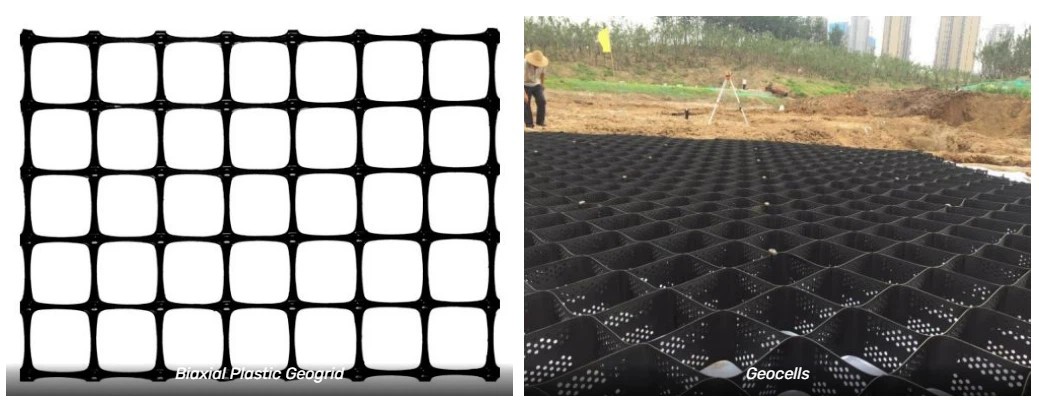
Geocells: Geocells are three-dimensional honeycomb structures made from high-density polyethylene (HDPE), polypropylene (PP), or other polymer materials. These cells are connected by welding or other methods to form individual cells that expand to create a honeycomb structure. Geocells are mainly used to enhance soil load-bearing capacity, prevent soil erosion, stabilize roads and slopes, and more.
Geogrids: Geogrids are two-dimensional or three-dimensional grid structures made from polymer materials such as polypropylene, polyester, and glass fiber. They can be classified into uniaxial geogrids and biaxial geogrids based on their structure. Geogrids are primarily used for soil reinforcement, foundation and subgrade enhancement, and erosion control.
II. Structure and Materials
Structure
Geocells: The three-dimensional honeycomb structure of geocells forms a stable grid system when expanded, with each cell capable of being filled with soil, gravel, or concrete. This structure increases the soil's load-bearing capacity and provides lateral confinement.
Geogrids: Geogrids have a relatively simple grid structure. Uniaxial geogrids have elongated apertures in one direction, suitable for applications requiring enhanced load-bearing capacity in one direction. Biaxial geogrids have uniformly distributed apertures in two directions, suitable for enhancing load-bearing capacity in both directions.
Materials
Geocells: The primary materials are HDPE, PP, and polyester (PET). HDPE materials have excellent chemical resistance and UV resistance, suitable for various harsh environments.
Geogrids: Materials include PP, PET, and glass fiber. Different materials have different mechanical properties and chemical stability and can be selected based on specific application needs.
III. Production Process
Geocell Production Process: Geocells typically use extrusion and welding processes. First, HDPE or PP material is extruded into strips using an extruder, then the strips are connected into a honeycomb structure through hot-melt welding or ultrasonic welding. Temperature and pressure must be strictly controlled during production to ensure welding strength and product quality.
Geogrid Production Process: The geogrid production process includes uniaxial stretching and biaxial stretching. The uniaxial geogrid production process includes extrusion, punching, heating, and stretching. First, polymer material is extruded into sheets, then punched, heated, and longitudinally stretched to form uniaxial geogrids. Biaxial geogrids are formed by adding a transverse stretching process after uniaxial stretching.
IV. Mechanical Properties
Tensile Strength
Geocells: Due to their three-dimensional structure and material properties, geocells have high tensile and compressive strength. When filled with materials, geocells provide strong lateral support, effectively dispersing and transmitting loads.
Geogrids: The tensile strength of geogrids mainly depends on the material and stretching direction. Uniaxial geogrids have high tensile strength in the stretching direction, while biaxial geogrids have high tensile strength in both directions, effectively dispersing loads.
Creep Resistance
Geocells: Due to the characteristics of HDPE material, geocells have good creep resistance and can maintain stable mechanical properties over the long term.
Geogrids: Geogrids made of polyester and glass fiber materials have excellent creep resistance, maintaining high strength under long-term load.
V. Installation and Construction
Geocells
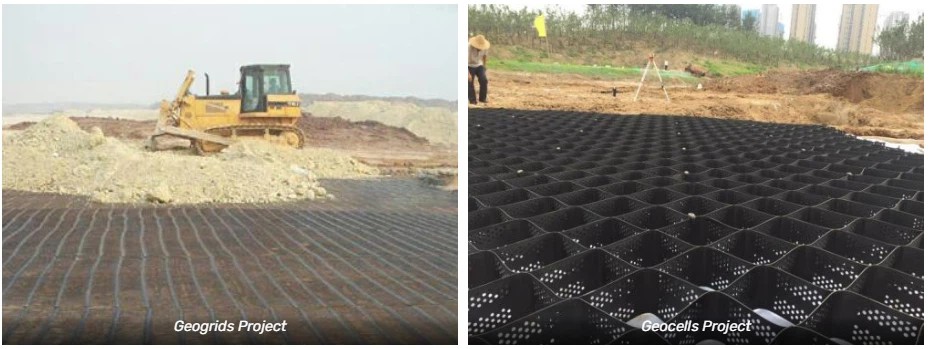
Installation Method: Geocells are typically transported in a folded form, expanded on-site, and connected to form a continuous honeycomb structure. During construction, geocells are laid on the base, filled with gravel, soil, or concrete, and compacted.
Construction Difficulty: Geocell installation requires a certain amount of space and labor, but the structure is simple, and the construction speed is relatively fast.
Geogrids
Installation Method: Geogrids are typically transported in rolls, laid out on-site, and fixed to the base. Multiple layers of geogrids can be stacked as needed to enhance reinforcement.
Construction Difficulty: Geogrid construction is relatively simple, but attention must be paid to the flatness and fixing method to ensure the reinforcement effect.
VI. Application Scenarios and Effects
Geocell Application Scenarios
Road and Railway Construction: Geocells are used for foundation reinforcement in roads and railways, improving the load-bearing capacity of the subgrade and reducing settlement and deformation.
Slope and Riverbank Protection: Geocells are used for soil stabilization and erosion control in slope and riverbank protection, effectively preventing soil loss and landslides.
Dams and Hydraulic Engineering: Geocells are used for soil reinforcement in dams and hydraulic engineering, enhancing structural stability.
Geogrid Application Scenarios
Roads and Airport Runways: Geogrids are used for foundation reinforcement in roads and airport runways, dispersing loads and reducing subgrade settlement and deformation.
Retaining Walls and Slopes: Geogrids are used as reinforcement materials in retaining walls and slopes, enhancing structural stability and shear resistance.
Land Reclamation and Landfills: Geogrids are used for soil reinforcement and stabilization in land reclamation and landfills, preventing settlement and sliding.
VII. Cost-Effectiveness Analysis
Material Cost
Geocells: Due to their complex three-dimensional structure and material properties, geocells have relatively high material costs.
Geogrids: Geogrids have relatively low material costs, especially uniaxial geogrids, which have simpler production processes and lower costs.
Construction Cost
Geocells: Geocell construction costs are relatively high due to the labor and equipment required for installation, but the construction speed is relatively fast, saving construction time.
Geogrids: Geogrid construction costs are relatively low, with simple installation processes, but attention must be paid to flatness and fixing methods to ensure the reinforcement effect.
Long-term Benefits
Geocells: Geocells have high durability and creep resistance, maintaining their mechanical properties over the long term, reducing maintenance and replacement costs.
Geogrids: Geogrids have excellent creep resistance and durability, but long-term performance depends on specific materials and construction quality.
VIII. Environmental Protection and Sustainability
Environmental Performance
Geocells: HDPE material geocells have excellent chemical resistance and UV resistance, are non-polluting to the environment, and have a long service life.
Geogrids: PP, PET, and glass fiber material geogrids have good chemical stability and durability, and are environmentally friendly.
Sustainability
Geocells: Geocells have a long service life, maintaining their function over the long term, reducing maintenance and replacement frequency, and having good sustainability.
Geogrids: Geogrids have high service life and durability, but long-term performance depends on specific materials and construction quality.
In summary, geocells and geogrids, as two important geosynthetic materials, have significant differences in structure, materials, production processes, mechanical properties, installation and construction, application scenarios, cost-effectiveness, and environmental sustainability. Geocells are suitable for scenarios requiring enhanced soil load-bearing capacity and stability, especially in road construction, slope protection, and hydraulic engineering. Geogrids, on the other hand, are suitable for scenarios requiring soil reinforcement and erosion control, such as road foundations, retaining walls, and land reclamation.
Appendix: Reference Data
The following are some technical parameters and performance data related to geocells and geogrids for reference:
Through the detailed analysis above, one can better understand the characteristics of geocells and geogrids and their respective advantages and limitations in different engineering applications, thereby making more scientific and reasonable choices in practical engineering.