
‹
›
 facebook
 twitter
 linkedin
 google+
Description
What is a Geocell?
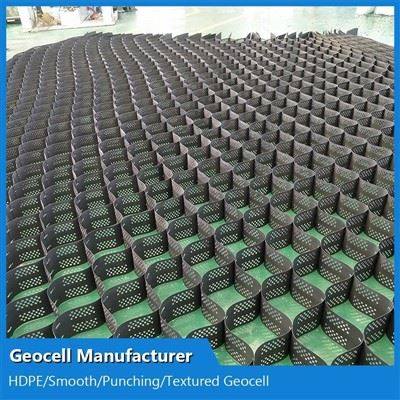
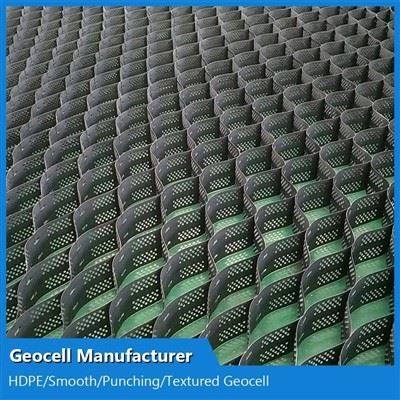
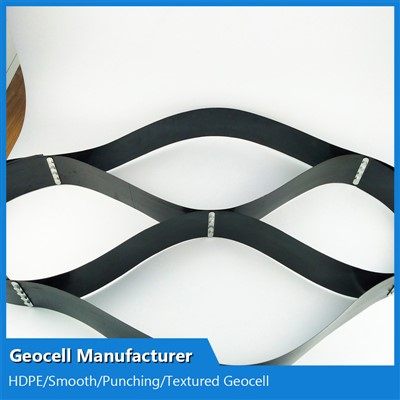
It looks very similar to a honeycomb, presenting a hexagonal shape. From a scientific perspective, a honeycomb shaped three-dimensional confinement system can significantly improve the performance of filling materials in load-bearing and erosion control applications over a large range. In the experiment, scientists found that the apparent cohesive force of dense sand in the lattice increases by more than thirty times due to the confinement effect of the lattice.
And the geogrid will also make the reinforced pavement more stable and less prone to displacement and collapse due to the friction with the interface filling material, its own limiting effect, and the reaction force between the grid cells. So it is often used to reinforce or repair road surfaces.
Product Specifications
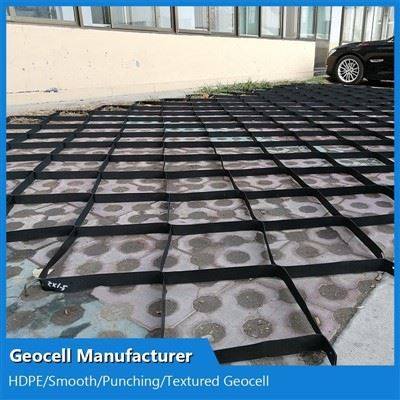
How Does Geocell Work on Driveways?
The Geocell system is a highly effective, economical solution to road surface problems resulting from subgrade material failure or surface/base material instability. This 3D cellular confinement system reduces vertical differential settlement into soft subgrades, improves shear strength, and enhances load-bearing capacity. It also prevents the lateral displacement of infill and reduces vertical deflections even on low-strength subgrades, while reducing the amount of aggregate material required to extend the service life of roads.
- Increases layer strength, and reduces base layer thickness and wearing course.
- Distributes loads laterally and reduces vertical deflection and subgrade contact pressures.
- Controls shearing and lateral movement of the coarse and permeable infill material.
- Significantly minimizes surface rutting, increases lifespan, and reduces repair and maintenance cycles.
- With open aggregate infill, reduces stormwater runoff.
Product Features
- Coverage: 230sf per Panel
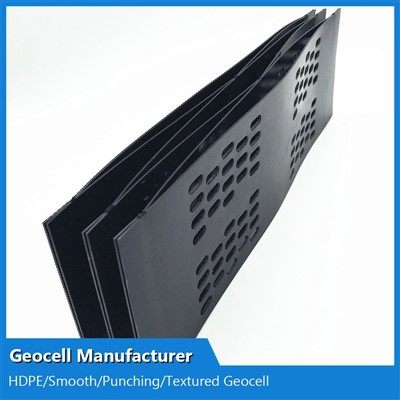
- Perforated Material with Cell Opening Size: 12.6" wide x 11.3" long
- Made with 100% Recyclable Material from Reprocessed Resins
- Tensile Strength: 1,885lbs per square foot
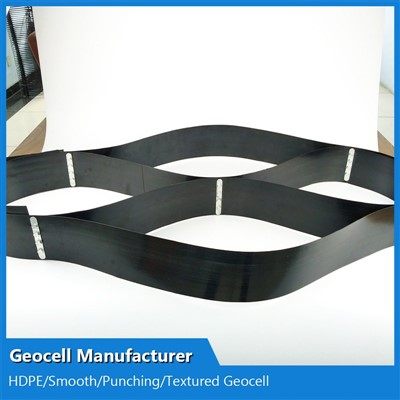
- UV Stabilized and Ultrasonically Welded for Maximum Strength
- Manufactured in an ISO-9001:2008 and CE Certified Facility
- Able to be Cut Down to Size and Reattached as Needed
Geocell Benefits for Driveways
Forget Regular Maintenance
Your project continues when clients request gravel maintenance and asphalt resealing. However, you can install Geocell panels and be finished with the driveway for 75+ years.
No Sub Base
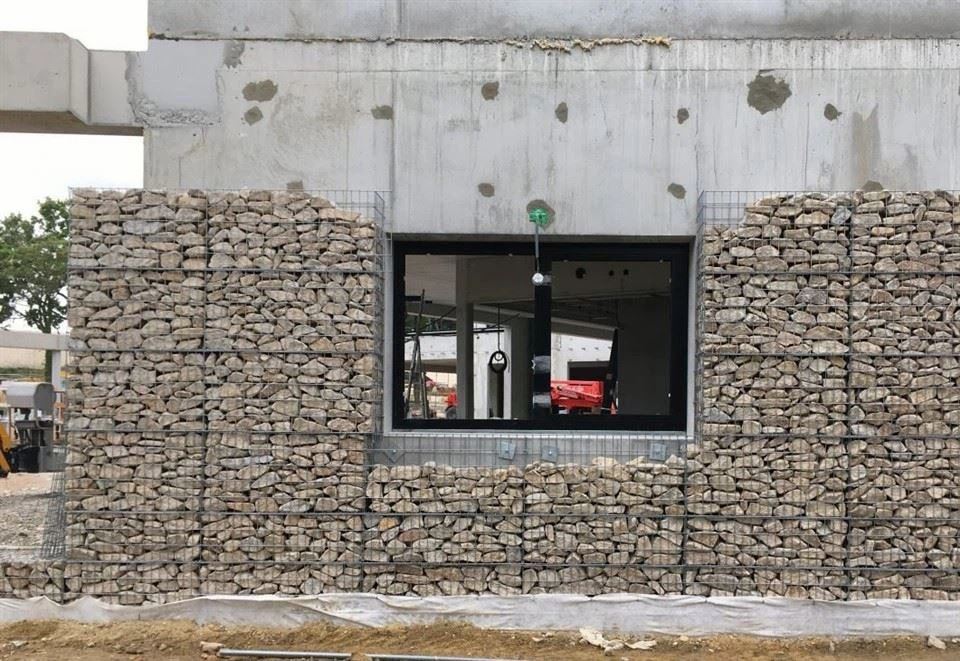
Gabion-size stones and wire mesh boxes are not necessary when Geocell evenly distributes downward forces. Depending on the project, you can even use recycled infill rather than haul heavy materials off-site.
Dig 33% Less Driveway
Irrigation, utility, wifi, and other lines may run underneath your driveway section, causing construction problems. However, Geocell cuts down excavation time by laying the base on ⅓ less depth than other foundations.
Driveway Drainage
Our geocell structures are perforated and have natural drainage like gravel and asphalt. Prevent pooling, flooding, and potholes with a cost-effective product that doesn't compromise driveway strength.
No Settling for Specialists
Our Geocell creates a time-efficient driveway without concrete pouring and settling times. Improve your private or public reputation by shortening the completion date and removing concrete crews.
Same-Day Driveway Traffic
Instead of waiting 3-27 days for regular driveways to settle, you can take your car or truck on the project immediately after infill. Clients can open their new driveways right after you finish with a quicker turnaround thanks to Geocell.
Recycle Infill Material
Save more with Geocell driveways by having greater infill versatility. Local aggregate and sands add foundational support to the project while allowing you to fill with gravel and other materials.
How to Install the Geocell Driveway?
Steps that must be taken during the geocell driveaway installation for land stabilization are as follows:
Preparation of Land
First, it is necessary to prepare the surface on which the geocells will be placed. The soil is flattened. The depth and completeness of the hole dug to place geocells varies depending on the size and width of the geocells. When the floor is ready, the geotextile should be placed. Geotextile is a barrier between geocells and soil. It helps to keep soil and geocells stable.
Expansion of Geocells
You should expand the geocells depending on the area it occupies and how many geocells are to be placed. Make sure that the geocell ground grid is fully expanded or if the geocells are not fully opened, there is not enough size to cover the entire area.
Filling the Geocells
Geocells are filled with filling materials and then compressed onto the surface.
How to Construct the Ideal Driveway?
Geocells are a particular type of geotechnology that are utilised to enhance stability, drainage, and stability to the driveway's base layers.
Geocell ground grid is stiff, vertical structures that resemble pockets, as opposed to the flat geotextiles. These pockets are much more desirable when constructing a driveway than their flat counterparts for a number of reasons.
Vertical Support
Geocells support the substrate layered over them vertically thanks to their upright shape. The rock benefits from this support by keeping its shape and avoiding early compacting.
Improved Drainage
Geocells prevent compaction over time by cradling the substrate that is dispersed over them. Geocells airflow stays between the rocks for a longer period of time as a result of the substrate's ability to hold its position. This not only increases strength but also encourages drainage by enabling water to pass through the rock successfully.
Process of Installation
Geocell installation is a straightforward technique that merely involves adding a layer to the routine driveway construction process. Geocells will be inserted either before or after the foundation layer, depending on your requirements. The base material swept over them will be stabilised by the geocells that are applied before the base layer. Sand or crushed stone that is compacted will be contained in geocells that are put after the foundation layer.
Cost-benefit evaluation while selecting Geocell Ground Grid
The initial expense of installing geocells in your driveway typically pays for itself over time. Geocells provide unmatched strength and lifespan in climates where severe weather is frequent or seasonal.
Which Depth of Geocell to Use?
Choosing the correct depth of Geocell is crucial and depends on several factors, including load requirements, soil conditions, and slope angles. Here are some general recommendations:
2" Geocells
Suitable for light traffic areas, such as walkways, light-use animal and equipment areas, and light building areas like sheds and small greenhouses.
3" Geocell
Ideal for medium traffic areas, including driveways, walkways, trails, medium-sized building foundations, medium-use animal areas, and grass parking areas.
4" Geocells
Recommended for standard traffic areas, such as most gravel roads and driveways, standard vehicle use, livestock and farm animal areas, barn and shed foundations, gravel roads, parking areas, trails, and slope erosion control.
6" Geocells
Designed for heavier traffic areas, such as those used by heavy vehicles and equipment, low-traffic road base reinforcement, heavy traffic gravel roads, building base reinforcement, equipment parking, small airport runways and taxiways, and steep slope erosion control.
8" Geocells
Engineered for heavy-duty industrial applications, including heavy-duty access roads, logging roads, heavy equipment areas, road base reinforcement, and large building or structure foundation reinforcement.
Send Inquiry
You Might Also Like

Categories