
‹
›
 facebook
 twitter
 linkedin
 google+
Description
Drainage Cell with Geotextile: The Perfect Solution for Efficient Water Management
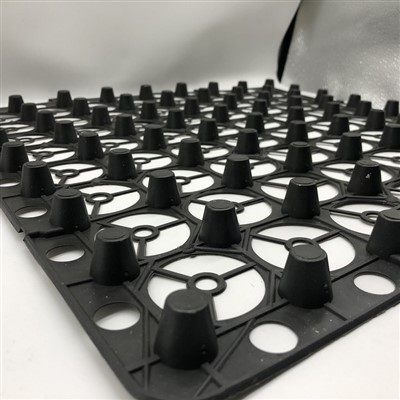
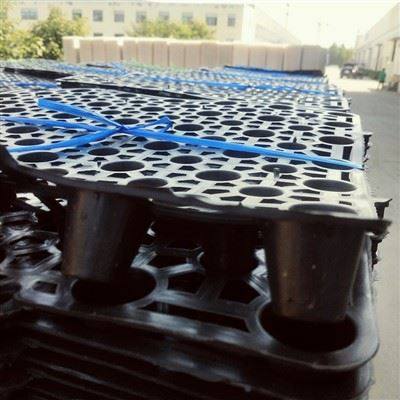
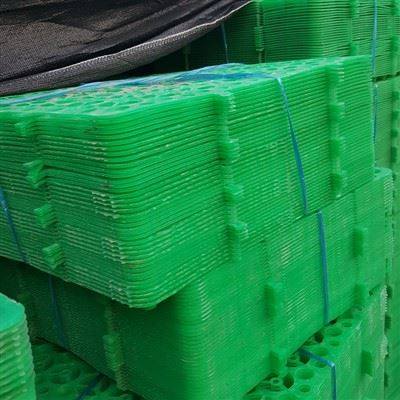
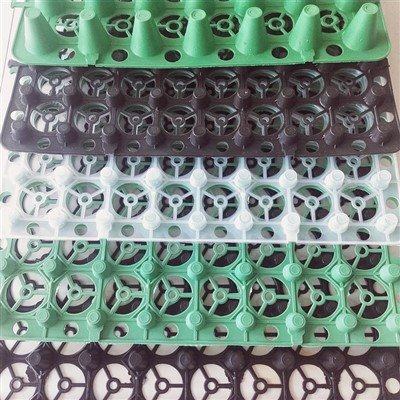
Drainage Cell with Geotextile is a lightweight board formed by heating and pressing high-density polyethylene (HDPE) or polypropylene (PP), which can not only create a drainage channel with a certain three-dimensional space support stiffness, but also store water.
This type of board has two comprehensive functions: water storage and drainage. The board has extremely high spatial stiffness, and its compressive strength is significantly better than similar products (which can be verified through on-site testing). It can withstand high compressive loads of over 400Kpa, and can also withstand extreme loads caused by mechanical compaction during the backfilling process of the planting roof.
What is a Drainage Cell with Geotextile?
Imagine having a reliable solution that not only ensures efficient water drainage but also protects the structural integrity of your building or landscape. That's precisely what a drainage cell with geotextile offers. This innovative product combines the robust structure of a drainage cell with the filtration capabilities of geotextile fabric, creating an exceptional system for managing water flow in various applications. In this article, we'll explore the features, benefits, applications, and technical specifications of drainage cells with geotextile, and explain why they are the go-to choice for professionals in construction and landscaping.
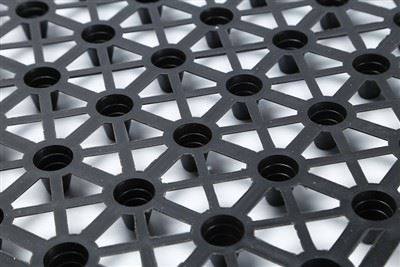
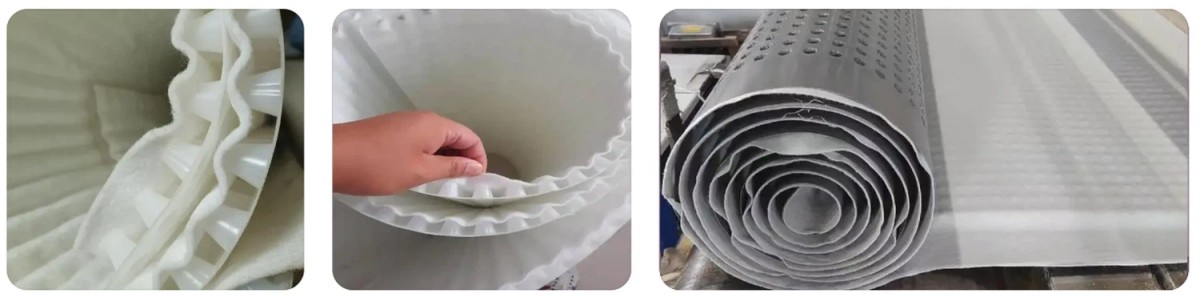
A drainage cell with geotextile is a high-strength, lightweight, modular system designed to provide efficient water drainage and soil filtration. The drainage cell is a three-dimensional, honeycomb-like structure made from high-density polyethylene (HDPE), which provides excellent load-bearing capacity and durability. The geotextile fabric is laminated onto the cell, offering superior filtration by preventing soil and debris from clogging the drainage system.
Key Features
High Compressive Strength: Drainage cells with geotextile are capable of withstanding heavy loads, making them suitable for use under concrete slabs, retaining walls, and landscaped areas.
Excellent Drainage Capacity: The design of the cells ensures rapid water drainage, reducing hydrostatic pressure and preventing waterlogging.
Superior Filtration: The geotextile fabric efficiently filters out soil and debris, maintaining the effectiveness of the drainage system.
Lightweight and Easy to Install: The modular design and lightweight materials make installation quick and easy, saving time and labor costs.
Environmental Sustainability: Made from recycled materials, drainage cells with geotextile contribute to sustainable construction practices.
Technical Specifications
Here are some typical technical specifications for drainage cells with geotextile:
Applications
Drainage cells with geotextile are incredibly versatile and can be used in a variety of applications, including:
Green Roofs: They provide efficient drainage, preventing waterlogging and promoting healthy plant growth.
Retaining Walls: Installed behind retaining walls, they help manage water flow and reduce hydrostatic pressure.
Landscape Drainage: Ideal for garden beds, lawns, and landscaped areas, ensuring proper water management and preventing soil erosion.
Sports Fields: Used under synthetic turf, they ensure quick drainage and maintain a stable playing surface.
Basements and Underground Structures: Protects against water infiltration, keeping these areas dry and structurally sound.
Road and Railway Embankments: Manages water runoff and prevents erosion, maintaining the stability of these structures.
Benefits of Using Drainage Cells with Geotextile
Effective Water Management: Provides efficient drainage, reducing the risk of waterlogging and associated problems such as root rot and structural damage.
Cost Savings: Quick and easy installation reduces labor costs, and the long lifespan of the materials minimizes maintenance expenses.
Enhanced Structural Integrity: By managing water flow and reducing hydrostatic pressure, these systems help maintain the stability and longevity of structures.
Environmental Protection: Prevents soil erosion and promotes sustainable construction practices by using recycled materials.
Versatility: Suitable for a wide range of applications, from residential landscaping to large-scale infrastructure projects.
Installation and Maintenance
Installation:
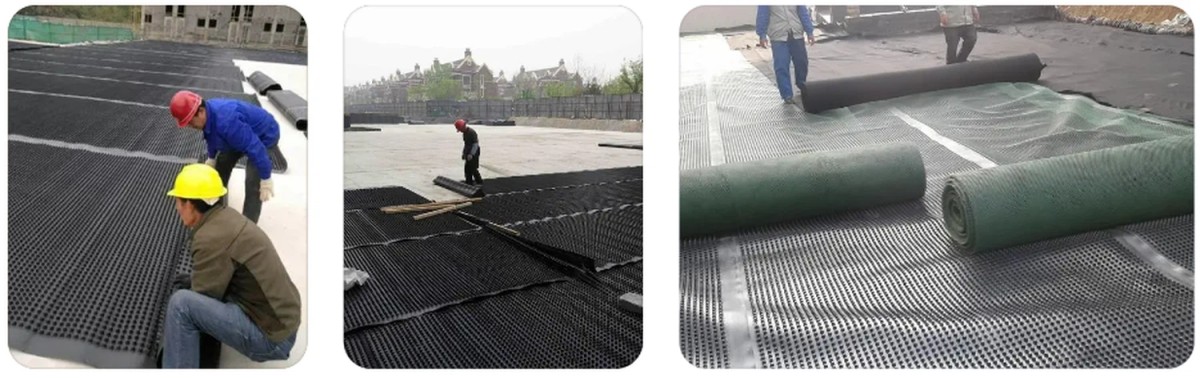
Site Preparation: Ensure the installation site is clean and level. Remove any debris or sharp objects that could damage the geotextile.
Positioning the Cells: Lay the drainage cells on the prepared surface, ensuring they are aligned correctly and fit together seamlessly.
Securing the Geotextile: Overlap the geotextile fabric at the edges to ensure continuous coverage. Secure it using pins or staples if necessary.
Backfilling: Once the cells and geotextile are in place, backfill with soil or other appropriate materials, ensuring even distribution to avoid damage.
Maintenance:
Regular Inspections: Check the system periodically for signs of damage or blockage. Ensure the geotextile fabric is intact and the cells are free from debris.
Cleaning: In exposed applications, clean the geotextile fabric to maintain its filtration capabilities.
Repairs: Promptly address any damage to the cells or geotextile to ensure the system continues to function effectively.
Case Studies
1. Green Roof Installation in New York: Background: A commercial building in New York required a green roof to enhance sustainability and aesthetics. Solution: Drainage cells with geotextile were installed to manage water drainage and support plant growth. Result: The green roof has thrived, with healthy plants and no issues with waterlogging or structural damage, showcasing the effectiveness of the drainage system.
2. Retaining Wall in California: Background: A residential property in California needed a retaining wall to prevent soil erosion on a sloped area. Solution: Drainage cells with geotextile were installed behind the retaining wall to manage water flow and reduce hydrostatic pressure. Result: The retaining wall has remained stable, with no signs of erosion or structural issues, highlighting the benefits of the drainage system.
Drainage cells with geotextile are an essential solution for efficient water management in various applications. Their combination of high compressive strength, excellent drainage capacity, and superior filtration makes them the go-to choice for professionals in construction and landscaping. Whether you're installing a green roof, building a retaining wall, or managing landscape drainage, these systems offer the reliability and performance you need.
Ready to take your project to the next level with the power of drainage cells with geotextile? Contact us today to learn more about our high-quality products and expert services. Embrace the future of efficient water management and ensure the success and sustainability of your next project.
Send Inquiry
You Might Also Like
Categories