
‹

›
 facebook
 twitter
 linkedin
 google+
Description
Introduction of Composite Drainage Board
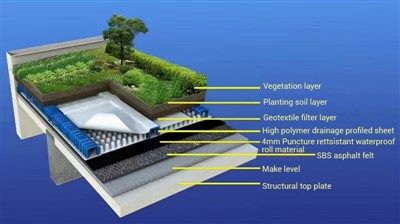
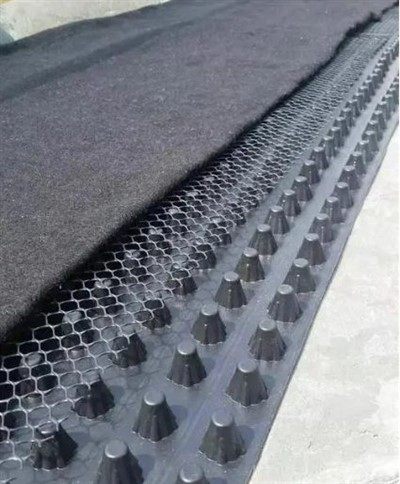
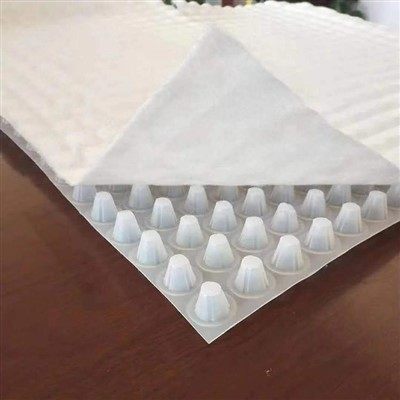
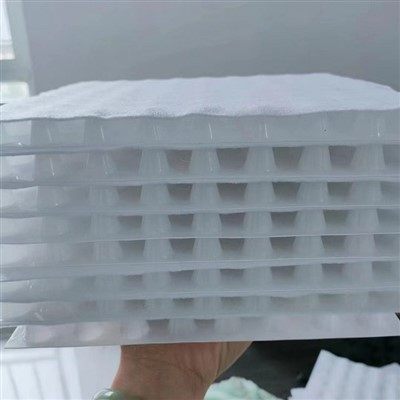
The composite drainage board has three special structures. The middle ribs are rigid and arranged longitudinally to form a drainage channel. The composite drainage Flat noodles of the ribs arranged crosswise up and down forms a support to prevent the geotextile from embedding into the drainage channel, and can maintain high drainage performance even under high loads. The composite use of double-sided adhesive permeable geotextile has the comprehensive performance of "filtration drainage breathability protection" and is currently the most ideal drainage material. Composite drainage boards are applied in soft foundation treatment, roadbed reinforcement, slope protection, bridge abutment reinforcement, coastal slope protection, and reservoir bottom reinforcement projects.
Product Feature
1. Strong drainage ability (equivalent to one meter thick gravel drainage).
2. High tensile strength.
3. Reduce the probability of geotextile embedding into the mesh core and maintain long-term stable drainage.
4. Long term withstand high pressure loads (capable of withstanding compression loads of approximately 3000Ka).
5. Corrosion resistance, acid and alkali resistance, and long service life.
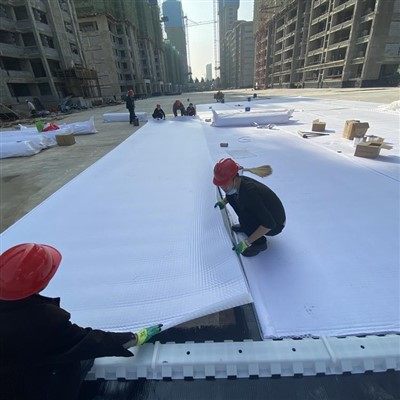
6. Convenient construction, shortened construction period, and reduced costs.
Benefits of Using Composite Drainage Board
- Good drainage and effective filtration, allowing organized water inflow without the need for a slope.
- Large bearing capacity, not easily deformed, resistant to moisture, and long-lasting.
- High surface flatness, with integrated glue brushing and an integrated process, ensuring good adhesive force.
- Convenient construction, shortening the construction period, and reducing costs.
- Reasonable design: collects infiltrated water and uses it for garden irrigation, saving water resources.
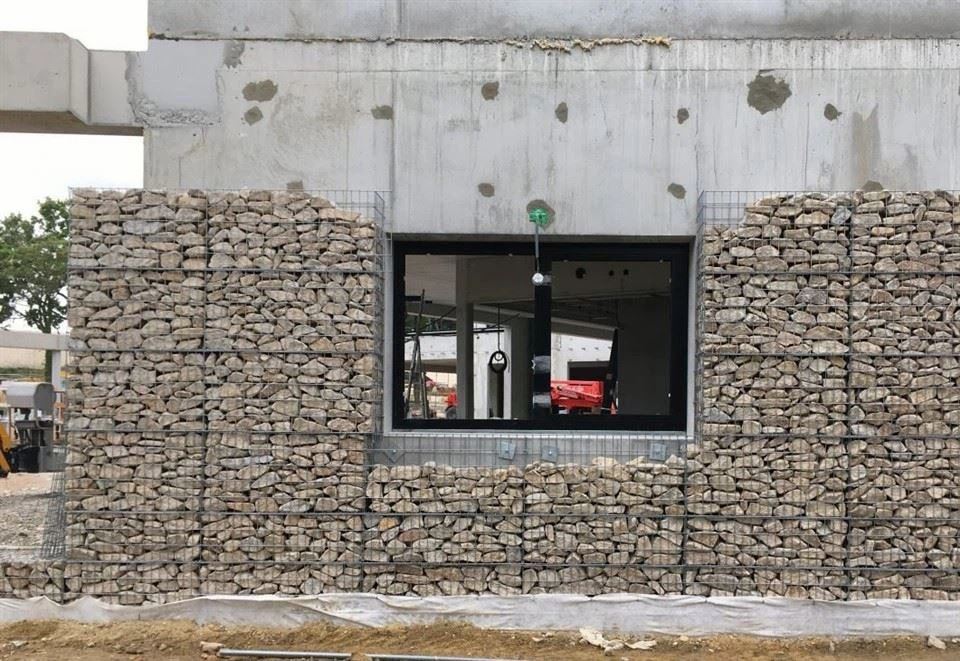
- Wide range of applications: suitable for deep-sea operations, solving the problem of low strength in gabions made of other materials due to long-term sea water erosion.
Application Range of Composite Drainage Board
- Greening project: the garage roof greening, roof garden, vertical greening, roof greening, football pitches, golf course, etc.
- Municipal engineering: airport, road embankment, subway, tunnel, landfill, etc.
- Construction: the upper or lower building foundation, inside and outside the basement wall, floor and roof, roof seepage control and heat insulation layer, etc.
- Water conservancy project: the reservoir seepage water, reservoir, lake water seepage control, etc.
- Traffic engineering: highway, railway basement, roadbed, dam and slope protection layer, etc.
Tips To Establish A Good Drainage System With Composite Drainage Boards
Design and Install A Waterproof and Drainage Layer
Before the installation of the waterproof layer, the exposed bolt head that initially supports the drainage board surface should be cut and wrapped with mortar. After smoothing the uneven part with mortar, non-woven geotextiles(also known as non-woven fabrics) and dimple sheets will be fixed from the arch lining towards both sides of the tunnel. Moreover, geotextiles shall be fixed with cement nails and PVC gaskets in advance while drainage sheets can be welded firmly to the gaskets by hot air welding machines.
Proper Measures For Soft Permeable Pipe Blind Ditch
The reserved length of the pipe joint should be considered when processing and cutting the flexible permeable pipe to ensure that both ends of the annular blind pipe can fully enter the longitudinal blind ditch. Permeable pipes need to closely contact the shotcrete surface while a certain degree of looseness must be guaranteed, and should not be overly stretched. In the meantime, exposed anchors that fix permeable pipes should be cut or smoothed with mortar to prevent puncturing the drainage board. All in all, to prevent water leakage and damage to the pipe joints, they should be well-treated during construction. In addition, all of the joints in the pipes should be checked before cementing procedures.
Pay Special Attention to the Structural Joint Waterproofing Issue
Structural joint waterproofing in the tunnel circle, longitudinal construction joint, and settlement joint is often the weak point of structural waterproofing. A back-mounted PVC water stop should be attached between the drainage sheet at the structural joint and the secondary lining concrete to improve the structural joint's water resistance ability. An experienced geotechnical engineer will know what water stop and waterproofing materials must be used when pouring concrete. The tamping of the butt joints must be paid more attention to because damage or dislocations of the water stop can occur.
Other Auxiliary Waterproofing Measures
When the local water leakage occurs after the tunnel is excavated, embedding rigid plastic pipes can be used for diverting the water to the scupper hole at the side wall for drainage. As for the seepage water that covers a large area, drainage boards could be put into use for draining this water away. Last but not least, an MF7 plastic blind ditch needs to be set every 50 meters in the section without an inverted arch or under the road for drainage when concentrated groundwater is found at the bottom of the tunnel.
Send Inquiry
You Might Also Like

Categories