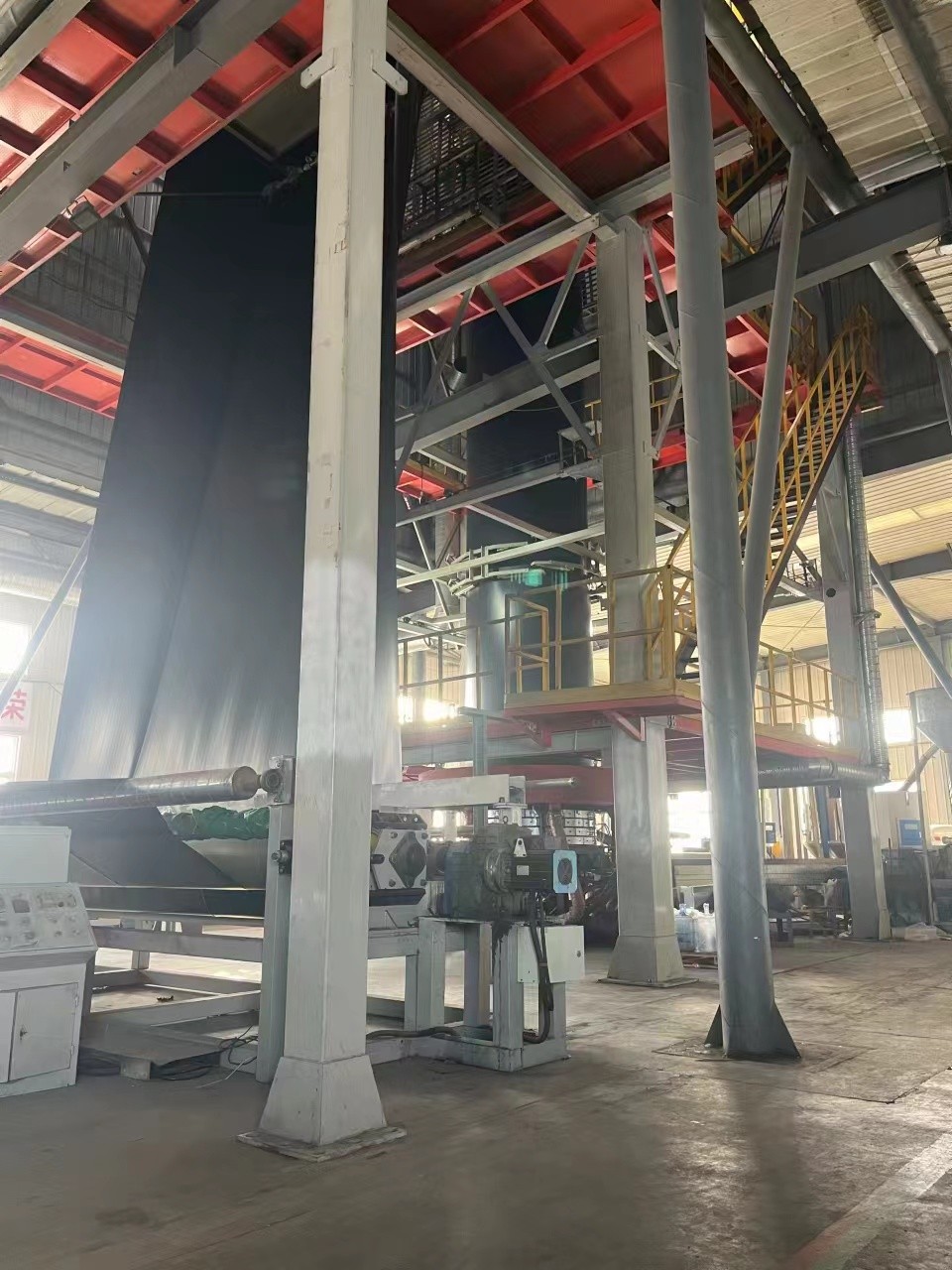
Reinforced HDPE Geomembrana For Agricultural Irrigation Reservoir in Mexico
In early 2024, an agricultural development zone in Sinaloa, Mexico launched a large-scale irrigation enhancement project. The region’s high evaporation rate and limited freshwater resources required the construction of a durable, low-permeability irrigation reservoir to support year-round crop production.
To ensure water conservation and prevent seepage losses, the engineering team selected a reinforced HDPE geomembrana system due to its outstanding impermeability, chemical stability, and UV resistance under intense sunlight.
Material Specifications
The chosen reinforced HDPE geomembrana provided additional puncture resistance compared to standard HDPE liners, which is crucial for agricultural reservoirs that may contain rocks or plant debris.
Reservoir Design & Subgrade Preparation
Before deployment, the reservoir subgrade underwent a series of engineering procedures to guarantee liner stability:
Excavation and Slope Formation
The reservoir was excavated to a depth of 4.5 meters with side slopes of 1:2 to optimize volume and safety.
Subgrade Smoothing
The entire base was compacted to 95% density and inspected for protrusions or sharp rocks that could damage the liner.
Protective Layer Installation
A 300 g/m² non-woven geotextile was placed beneath the liner to improve puncture resistance and distribute load.
Geomembrana Deployment & Welding Process
1. Deployment
Rolls were mechanically unrolled to avoid stretching.
Panels were positioned from the lowest point upward to reduce tension during filling.
Extra allowances were given for thermal expansion due to Mexico’s high daytime temperatures.
2. Seam Joining
The welding process followed strict QA/QC protocols:
Hot wedge fusion welding was used for long seams.
Extrusion welding reinforced T-junctions, corners, and pipe penetrations.
All seams were tested via:
Air-pressure testing
Vacuum box inspection
Spark testing for detailed areas
3. Anchor Trench Stabilization
The perimeter was secured in a 40 × 40 cm anchor trench to prevent slippage as the reservoir filled.
Performance Testing & Quality Control
To ensure long-term waterproofing performance, the following tests were carried out:
Tensile and tear strength testing on liner samples
Peel and shear strength testing on welded seams
Field permeability checks
Visual inspection under different lighting conditions to detect micro-cracks
All test results complied with the required engineering standards.
Operational Results
After the reservoir was filled and monitored for 60 days, the reinforced HDPE geomembrana demonstrated excellent performance:
Zero seepage detected through monitoring wells
Strong resistance to UV degradation under high sunlight exposure
Stable anchoring despite high water pressure and seasonal temperature changes
Improved irrigation efficiency, contributing to a 17% reduction in water consumption for surrounding farms
The success of the project validated the geomembrana’s suitability for large-capacity agricultural water systems.
Environmental and Economic Benefits
Reduced water loss: Impermeable barrier minimizes seepage
Longer service life: Designed for over 20 years with proper maintenance
Lower operational costs: Less frequent maintenance compared to concrete lining
Eco-friendly: HDPE geomembrana is recyclable and safe for agricultural use
The use of reinforced HDPE geomembrana played a critical role in enhancing the irrigation infrastructure in Sinaloa, Mexico. With excellent waterproofing performance, UV stability, and mechanical durability, it serves as an efficient and cost-effective solution for modern agricultural water management.