
Project Overview
Chile, known for its vast copper mining operations, required a reliable solution for containing leachate and tailings in a new open-pit mining site. The site was located in the Atacama Desert, one of the driest places on Earth, yet the harsh environmental conditions — extreme temperatures and seasonal heavy rainfall — posed significant challenges for waste containment.
The mining project involved the construction of a tailings pond and a leach pad to safely store mining by-products. After evaluating multiple containment systems, the engineering team selected PVC geomembrane for its durability, chemical resistance, and cost-effectiveness.
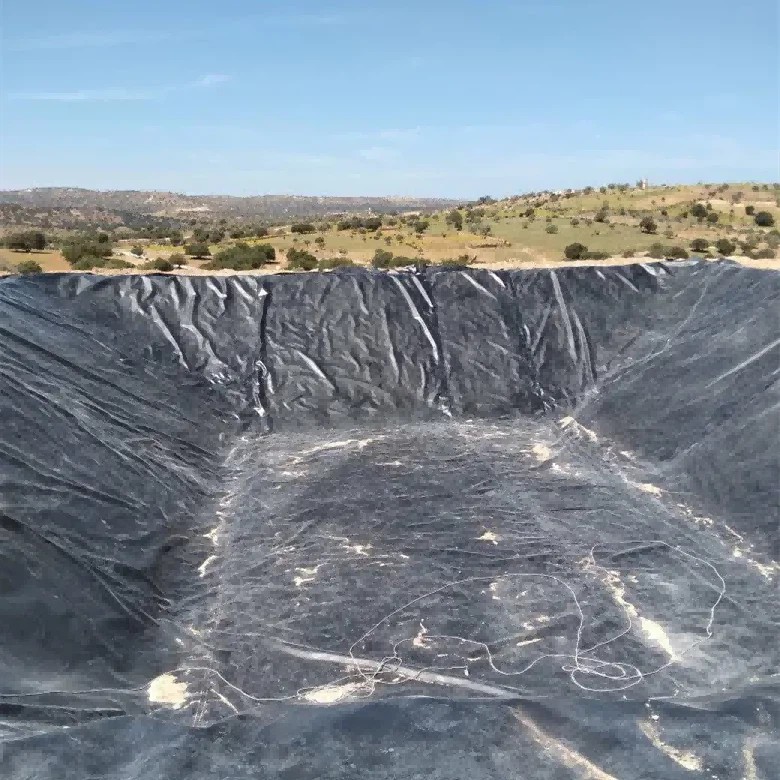
Material Specifications
For this mining application, the following PVC geomembrane specifications were selected:
The 1.5 mm thickness was chosen due to its excellent puncture resistance and ability to withstand chemical leaching from mining waste. The UV stabilization ensured the material’s longevity despite prolonged exposure to sunlight in the high-altitude desert environment.
Installation Process
Step 1: Subgrade Preparation
The site was prepared through the following procedures:
Excavation to remove debris and sharp objects.
Compaction to ensure a stable base for the geomembrane.
Smoothening of the subgrade to prevent uneven pressure on the liner.
Step 2: Geomembrane Deployment
Rolls of PVC geomembrane were carefully unrolled and placed over the prepared subgrade.
Seams between adjacent rolls were aligned with precision, ensuring no wrinkles or unnecessary tension in the material.
Step 3: Welding & Seaming
Hot air welding was used for seam joins, ensuring an airtight and watertight seal.
Extrusion welding was applied at critical junctions and penetrations to increase the strength of the seams.
Weld testing included pressure testing, vacuum box testing, and spark testing.
Step 4: Anchoring & Protection
Edge anchoring was completed by burying the geomembrane in an anchor trench, preventing movement from external forces.
The geomembrane was protected from mechanical damage by covering it with a sand cushion or additional geotextile in high-traffic or exposed areas.
Performance Testing and Quality Control
Before the system went live, a series of tests were conducted to verify the quality of the geomembrane installation:
Tensile Strength Testing: Ensured the material could withstand the stresses of daily operation.
Elongation at Break Testing: Ensured the material’s ability to stretch without cracking.
Seam Strength Testing: Ensured welds were strong enough to handle operational pressures.
Permeability Testing: Ensured the liner met the low-permeability standard of < 1.0 × 10⁻¹³ cm/s.
Testing was conducted both in-situ and in the laboratory. All results exceeded the industry standards required for mining containment projects.
Project Results and Benefits
The PVC geomembrane system provided significant environmental protection and operational efficiency:
Effective containment of tailings and leachate: Zero detectable leakage in the tailings pond and leach pad.
Durability: The liner withstood the extreme desert temperatures (up to 40°C in summer and freezing cold in winter) without any degradation.
Chemical resistance: The liner performed well against acidic and alkaline leachate from mining operations.
Long-term performance: Estimated lifespan of over 30 years, minimizing future maintenance costs.
Cost savings: The PVC geomembrane solution was more cost-effective than alternative systems, reducing installation time and labor costs.
Environmental and Economic Impact
This mining project achieved both environmental protection and economic benefits through the use of PVC geomembrane:
Groundwater protection: The geomembrane prevented harmful mining by-products from leaching into the surrounding soil and groundwater, reducing environmental risks.
Water conservation: By efficiently containing water and chemicals, the project minimized water waste and contamination, making it more sustainable.
Cost efficiency: PVC geomembrane’s low installation cost and long-term durability made it the most viable solution for this large-scale mining operation.
Conclusion
The use of PVC geomembrane in mining projects in Chile has proven to be a highly effective solution for tailings containment and leachate management. With its combination of durability, flexibility, chemical resistance, and cost-effectiveness, PVC geomembrane is a leading choice for mining, environmental protection, and water management applications.
For future mining projects, PVC geomembrane will continue to be a critical material in sustainable mining practices—providing long-term performance and reducing the environmental footprint of mining activities.