1. What is geotextile fabric?
Geotextile is a permeable geosynthetic material made from polymer fibers through hot pressing, needle punching, bonding, and weaving. It is also known as geotextile and includes several types such as weaving and non-woven fabrics.
2.Types of geotextiles
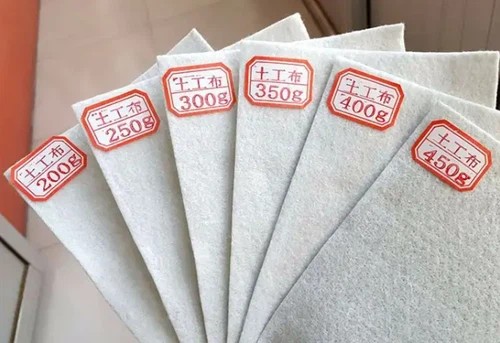
Geotextiles are mainly divided into two types: woven and non-woven. Weaving geotextiles include weaving methods: flat weaving, circular weaving, machine weaving: plain weaving, diagonal weaving, needle weaving: warp knitting, and seam weaving. Non woven geotextiles include mechanical reinforcement methods such as needle punching, water punching, chemical bonding methods such as spray coating, impregnation, and thermal bonding methods such as hot rolling and hot air bonding. In engineering applications, geotextiles can be used alone or combined with other geosynthetic materials such as geogrids, geomembranes, and geonets.
3.Features of geotextile
Woven geotextile appeared in the 1960s, characterized by high strength, high cost, poor filtration and drainage functions, and limitations in engineering applications. Non woven geotextiles began to be used in the late 1960s, and China began to apply this material to engineering entities in the early 1980s. Although China's non-woven fabric industry started relatively late, it has developed rapidly. High performance raw materials endow products with high strength and durability, and advanced production processes endow products with good functions, continuously expanding their application scope. Especially in the past 30 years, with the promotion of needle punched non-woven and spunbond non-woven processes, the application field of non-woven geotextiles has become more extensive than woven geotextiles, and has developed rapidly. China has become a major producer of non-woven fabrics in the world and is gradually moving towards a production powerhouse.
4.The main raw materials of geotextile
At present, the main raw material for geotextiles is synthetic fibers. The selection of various synthetic fibers should be based on the actual engineering situation, taking into account both the physical and chemical performance requirements of the application field and the product cost. Among them, polyester fibers and polypropylene fibers are the most commonly used, followed by polyamide fibers and polyvinyl alcohol formaldehyde fibers. Polyester fibers have good physical and mechanical properties, excellent toughness and creep characteristics, high melting point, high temperature resistance, aging resistance, mature production technology, and high market share. The disadvantages are poor hydrophobicity, easy accumulation of condensed water when used as insulation materials, poor performance at low temperatures, easy vitrification, reduced strength, and poor resistance to acid and alkali. Polypropylene fiber has good elasticity and instant elastic recovery, which is superior to polyester fiber; Excellent acid and alkali resistance, wear resistance, mold resistance, and low temperature resistance; Has good hydrophobicity and core absorption properties, which can transfer moisture along the fiber axis to the outer surface; The density is small, only 66% of polyester fiber, and after multiple stretching processes, fine fibers with tight structure and superior performance can be obtained. Combined with the reinforcement process, its strength can be even superior. The disadvantage is that it is not resistant to high temperatures, has a softening point of 130-160 ℃, poor light resistance, and is prone to aging and decomposition under sunlight. However, it can be made resistant to ultraviolet radiation by adding additives such as ultraviolet absorbers.
In addition to the above fibers, raw materials for non-woven geotextiles can also use jute fibers, polyethylene fibers, polylactic acid (PLA) fibers, etc. Natural fibers and specialty fibers have gradually entered various application fields of geotextiles, such as natural fibers (jute, coconut shell fibers, bamboo pulp fibers, etc.) being used in roadbed, drainage, revetment, soil erosion control and other fields.
5.The main function of geotextile
Geotextiles have various uses, including filtration, drainage, isolation, reinforcement, protection, and anti-seepage.
5.1 Filtering function
Due to the good permeability and air permeability of geotextiles, placing them in soil structures allows liquids inside the soil to pass through and be discharged, while also playing a role in soil protection. It can effectively prevent the loss of upstream soil particles, fine sand, and small stones, prevent soil damage, and maintain the safety and stability of the project.
5.2 Drainage function
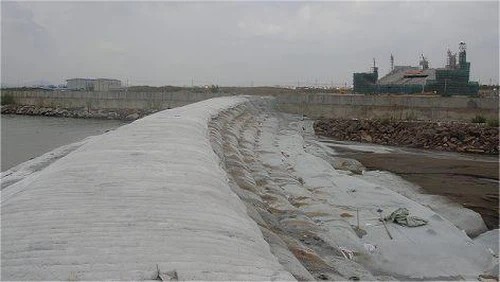
Geotextile, as a good water conducting material, acts as a drainage channel to collect the moisture inside the soil structure and slowly discharge it along the material.
5.3 Isolation Function
Isolation function refers to the ability of geotextiles to separate two materials with different properties, in order to prevent them from mixing and losing the integrity and structural integrity of each material. The geotextile laid between the ordinary railway ballast and the subgrade can effectively isolate the crushed stone ballast from the soil subgrade.
5.4 Reinforcement effect
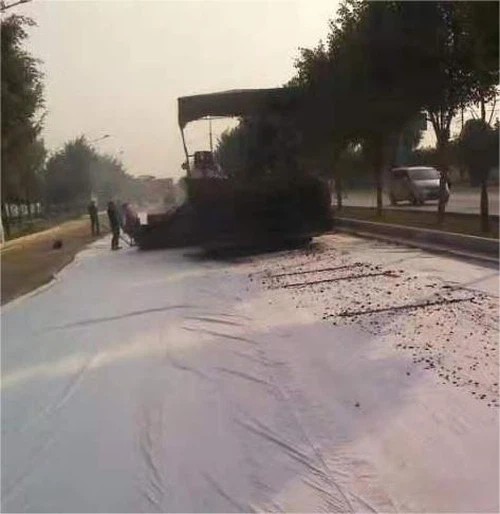
Geotechnical layout is used as reinforcement material inside the soil, or geotextile is combined with soil to form a composite. Compared with unreinforced soil, the strength and deformation performance of reinforced composite soil are significantly improved.
5.5 Anti leakage effect
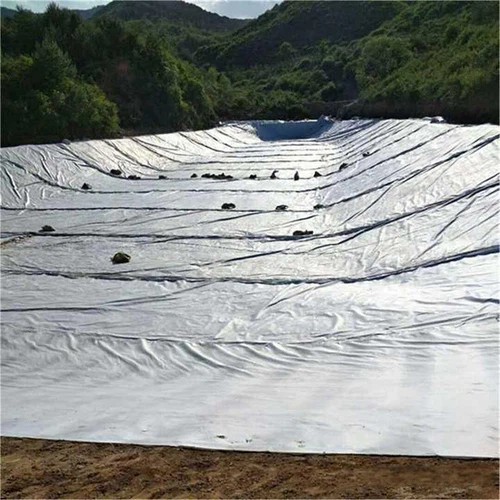
The composite of geotextile and geomembrane has low permeability (air permeability), which can prevent the flow and diffusion of liquids or gases, and play a role in anti-seepage or containment.
5.6 Protective Function
By implementing geotextile protection measures, soil erosion caused by rainfall impact and surface water runoff can be reduced. If geotextile and geonet are combined and laid on the surface of the exposed soil on the slope, it can effectively avoid or reduce the erosion of precipitation and surface runoff; A silt fence made of geotextile can filter out suspended soil particles in turbid runoff.
6. The main applications of geotextile
6.1 Anti leakage Engineering
In the fields of landfill sites, pollutant storage tanks, sewage treatment plants, environmental protection, and hydraulic structure anti-seepage, the composite of geotextile and geomembrane can achieve its anti-seepage function.
6.2 High speed rail ballastless track sliding layer
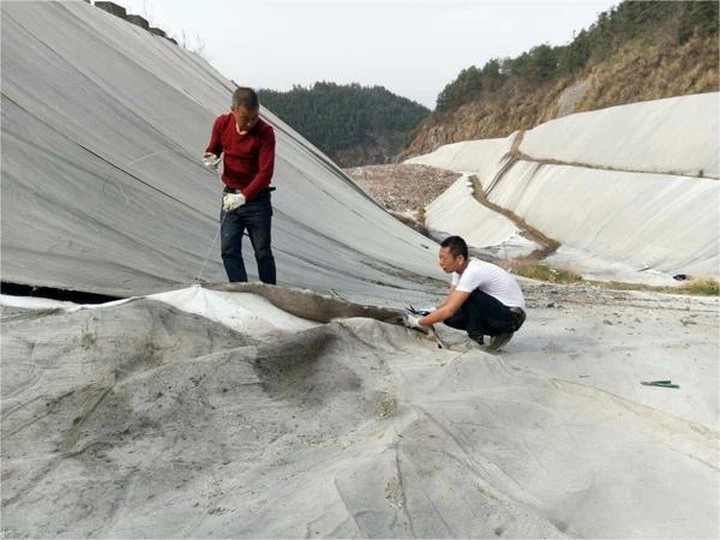
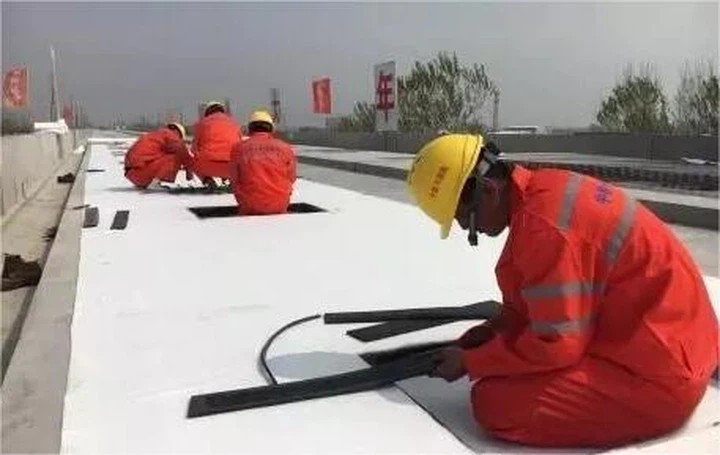
In order to prevent the expansion and contraction deformation of bridges caused by temperature changes from affecting the longitudinal track structure, reduce the interaction between the track system and the bridge, and ensure the stability and smoothness of the track structure, China's railway passenger dedicated lines have put forward strict requirements for the important components of the CRTS II slab ballastless track system on the bridge - the "two fabrics and one membrane" sliding layer, that is, the lower layer of geotextile with two layers of geotextile sandwiched between one layer of geotextile (400 g fabric+1.0 HDPE membrane+200 g fabric) and the isolation layer geotextile of CRTS III slab ballastless track.
6.3 Fly ash, tailings pond, mining and other storage yard projects
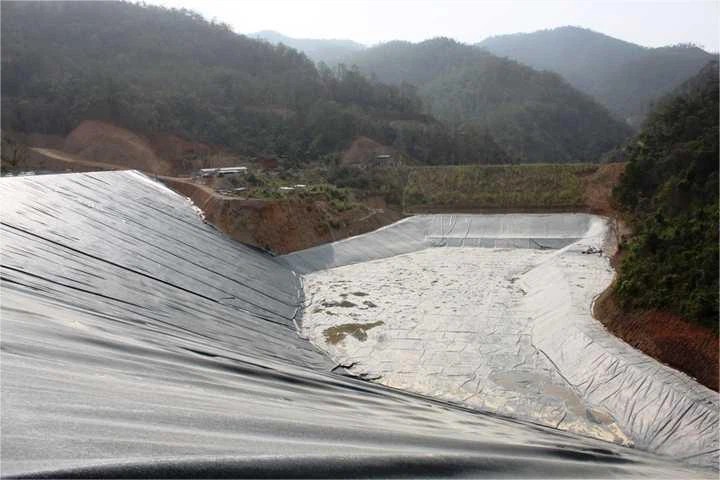
In order to reduce the stability of fly ash, tailings ponds, mines and other storage yards, and minimize their impact on the surrounding environment, geotextiles are used for reinforcement, isolation and anti-seepage
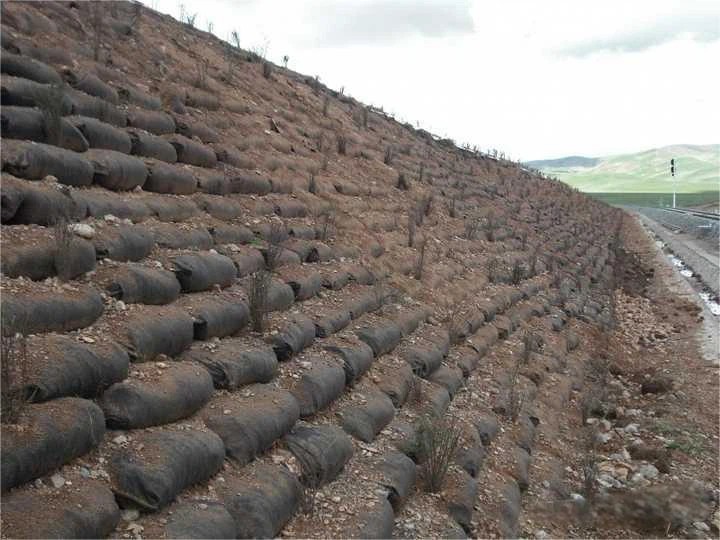
6.4 Ecological Bag Slope Protection
Engineering ecological bag is a bag made of high-strength, flat stable needle punched non-woven geotextile made of polypropylene as raw material. The ecological bag has strong corrosion resistance, UV resistance, non degradation, resistance to insect damage, aging, acid, alkali and salt corrosion, and microbial decomposition. Its function of being permeable and impermeable to soil not only prevents the loss of the filling material (soil and nutrient material mixture) inside the bag, but also enables normal exchange of water in the soil. The water required for plant growth can be effectively maintained and replenished in a timely manner. Plants can grow freely through the bag, and their roots can enter the engineering foundation soil, forming a re stabilization effect between the bag and the soil slope. It is one of the important construction methods in highway and railway slope greening protection, barren mountain and mine restoration, riverbank slope protection, and inland river regulation.