
1. Introduction: Why Thickness Selection Matters
The thickness of PVC geomembrana directly determines its mechanical strength, waterproof performance, and lifespan.
Choosing the correct thickness ensures both cost efficiency and engineering safety.
Too thin - and the liner risks puncture or tearing.
Too thick - and it adds unnecessary cost and installation difficulty.
In most projects, PVC geomembrana thickness ranges from 0.2 mm to 1.0 mm, depending on environmental conditions, installation surface, and load requirements.
2. The Structure and Function of PVC Geomembrana
PVC geomembrana (Polyvinyl Chloride waterproof liner) is a flexible polymer sheet designed for anti-seepage and corrosion protection.
It consists of:
PVC resin - the main waterproof base.
Plasticizers - provide softness and flexibility.
Stabilizers and UV absorbers - resist heat, aging, and sunlight.
Reinforced mesh (optional) - improves tensile strength and tear resistance.
The balance between flexibility and thickness makes PVC geomembrana one of the most versatile materials for environmental and industrial waterproofing.
3. How Thickness Affects Performance
The thicker the geomembrane, the stronger and more durable it becomes - but at a higher cost and installation effort.
4. Thickness Range Overview
? 0.2 mm – 0.3 mm: Light-Duty Waterproofing
Applications: Small ponds, flower beds, landscaping, moisture barriers.
Advantages: Low cost, easy to cut and weld, extremely flexible.
Limitations: Limited puncture resistance, not ideal for heavy loads or rough subgrades.
Installation Tips: Always add a nonwoven geotextile layer below to prevent sharp object penetration.
? 0.4 mm – 0.5 mm: Medium-Low Strength Applications
Applications: Irrigation canals, small fish ponds, temporary storage pits.
Advantages: Cost-effective while maintaining sufficient tensile strength.
Limitations: Still requires a smooth and clean subgrade.
Notes: Commonly used for agricultural and short-term waterproofing projects.
? 0.6 mm – 0.8 mm: Standard Engineering Thickness
Applications: Urban wastewater treatment, landfill covers, reservoir lining, tunnel waterproofing.
Advantages: Excellent mechanical balance - flexible yet strong enough for industrial use.
Performance: Can withstand moderate ground settlement and water pressure.
Industry Preference: This is the most widely used thickness range in civil engineering.
Chinese manufacturers typically produce this range as the default export specification, ensuring compatibility with ASTM and ISO standards.
? 0.9 mm – 1.0 mm: Heavy-Duty Industrial Protection
Applications: Mining leach pads, tailings ponds, oil and chemical containment, solid waste landfills.
Advantages: Exceptional puncture resistance and chemical durability.
Performance: Withstands high mechanical stress, uneven settlement, and long-term immersion.
Notes: Recommended when longevity (20–30 years) is required under extreme conditions.
5. Engineering Factors That Affect Thickness Choice
When selecting the right PVC geomembrana thickness, consider:
Project Type and Function
Decorative pond → 0.3 mm
Reservoir or canal → 0.6 mm
Landfill or tailings pond → 1.0 mm
Subgrade Condition
Smooth concrete base → thinner liner acceptable.
Rough, rocky soil → thicker liner or protective geotextile needed.
Water Pressure / Hydraulic Head
Shallow water → 0.5 mm
Deep reservoir (>3 m) → ≥0.8 mm
Expected Service Life
Short-term project → 0.3–0.5 mm
Long-term installation → 0.8–1.0 mm
Temperature and Climate
Cold areas: use PVC cold-resistant formulation (remains flexible below -25 °C).
Hot climates: ensure UV-stabilized formulation for anti-aging performance.
6. Advantages of Using PVC Geomembrana Across Thicknesses
Regardless of the chosen thickness, PVC geomembrana offers several universal benefits:
Excellent seepage resistance (impermeability ≤ 1.0 × 10⁻¹³ cm/s).
Outstanding cold flexibility and elongation rate (250–400%).
Strong chemical and biological resistance.
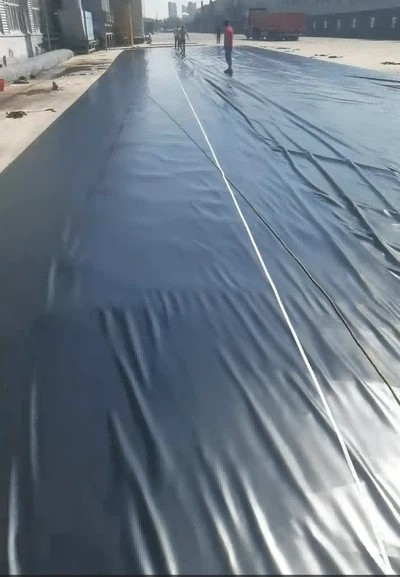
Easy hot-air or extrusion welding during installation.
High compatibility with concrete, geotextiles, and HDPE sheets.
Unlike HDPE, PVC remains soft and weldable even in low temperatures - a major advantage in winter projects.
7. Case Studies: Practical Thickness Selection
Case 1: Agricultural Irrigation Project, Thailand
Condition: Flat farmland, shallow pond, 2 m depth.
Selected Material: PVC geomembrana 0.5 mm.
Result: Lightweight, easy to install, cost-effective for seasonal use.
Case 2: Municipal Landfill, China
Condition: Large containment basin with clay subgrade.
Selected Material: 1.0 mm reinforced PVC geomembrana.
Result: Long-term sealing (>25 years), resistant to leachate corrosion.
Case 3: Tunnel Waterproofing, Europe
Condition: Cold region, underground temperature -10 °C.
Selected Material: 0.8 mm PVC with cold-flex plasticizer.
Result: Seamless waterproof layer that maintains flexibility in freezing cycles.
8. Cost and Logistics Considerations
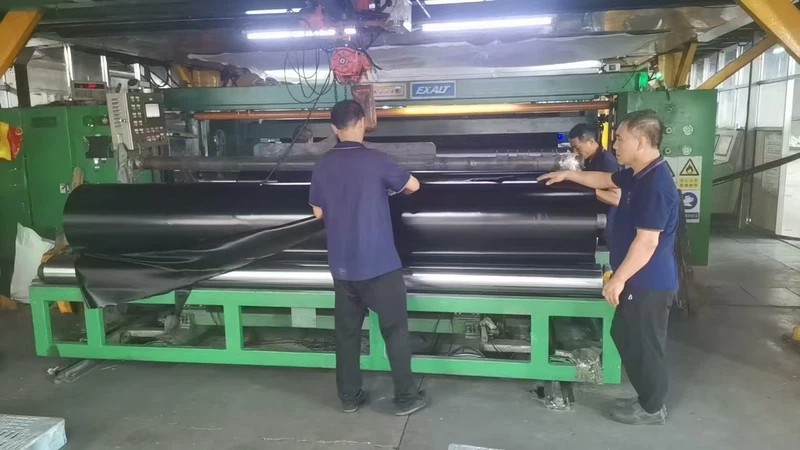
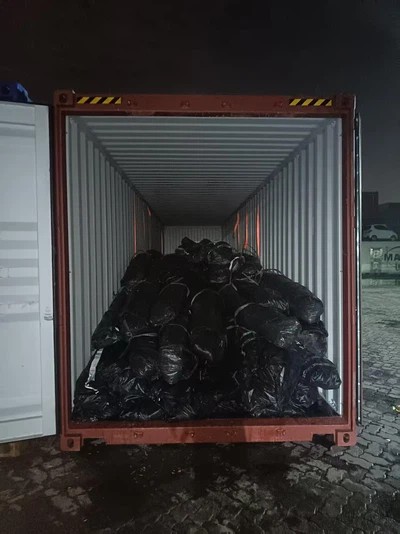
Chinese PVC geomembrana manufacturers can customize roll width, length, and reinforcement type to optimize transport and installation for international buyers.
9. Installation Tips by Thickness
Thin membranes (≤0.5 mm): Use smooth rollers and avoid over-heating during welding.
Medium membranes (0.6–0.8 mm): Allow slight thermal expansion gaps; use dual-track welds.
Thick membranes (≥0.9 mm): Preheat before folding; require higher welding temperature and slower speed.
Always perform peel and shear tests after welding to confirm joint integrity.
10. Expert Recommendations
For large-scale infrastructure, most Chinese geomembrana suppliers suggest starting from 0.8 mm to ensure long-term structural stability.
11. Conclusion
Selecting the right PVC geomembrana thickness is a balance between engineering demand, cost, and environmental conditions.
0.2–0.5 mm → Lightweight and flexible, for small or temporary projects.
0.6–0.8 mm → Standard, durable choice for most civil works.
0.9–1.0 mm → Heavy-duty liner for mining, tailings, and chemical containment.
As a leading PVC geomembrana manufacturer from China, we provide customized thickness options, formulation adjustments, and technical support for clients worldwide - ensuring the right liner for every project, from landscaping to large-scale environmental containment.
Choose smart, install right, and let your waterproof barrier last for decades.