
1. Introduction: Why Low-Temperature Flexibility Matters
In many engineering environments - from northern mining areas to alpine reservoirs and permafrost foundations - low temperatures can severely challenge waterproofing materials.
Traditional plastic membranes often become rigid, brittle, and prone to cracking when exposed to cold climates below 0 °C.
However, PVC geomembrana stands out for its remarkable flexibility and elongation in such environments.
Its ability to resist cold-induced embrittlement makes it a preferred choice for projects in cold regions such as Northern China, Russia, Canada, and Northern Europe.
2. What Gives PVC Geomembrana Its Flexibility
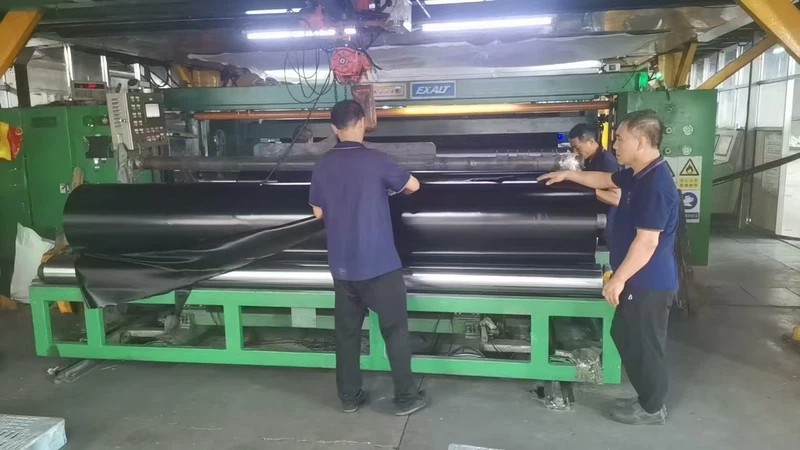
PVC geomembrana (Polyvinyl Chloride geomembrane) is a plasticized polymer liner, meaning it contains special additives known as plasticizers that soften the molecular structure of PVC resin.
The formula typically includes:
PVC resin (base polymer) - provides strength and chemical resistance.
Plasticizers (e.g., DOP, DOTP) - increase molecular mobility, improving flexibility.
Stabilizers - prevent thermal and UV degradation.
Carbon black or titanium dioxide - enhances UV resistance and surface toughness.
This composition creates a semi-crystalline polymer matrix that can bend, fold, and stretch even under freezing conditions - a feature HDPE or LLDPE liners struggle to match.
3. Laboratory Testing of Low-Temperature Performance
PVC geomembrana's low-temperature resistance is often evaluated through several international standards, including:
These results confirm that high-quality Chinese-made PVC geomembrana retains ductility and toughness even when other polymers begin to fail.
4. Comparison with Other Geomembrane Materials
As shown, PVC geomembrana's cold-resistance performance significantly surpasses HDPE membranes, which can crack or warp during winter installation.
5. Real-World Applications in Cold Climates
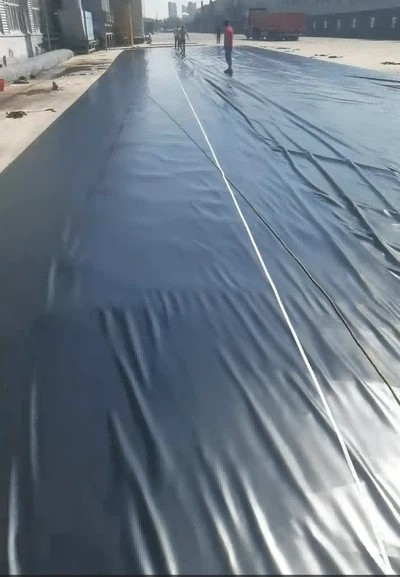
PVC geomembrana has been widely adopted in cold-region engineering projects that require both flexibility and impermeability:
❄️ Mining Leach Pads in Inner Mongolia and Kazakhstan
PVC liners remain flexible during -30 °C winters, preventing stress cracks around slopes and drainage channels.
❄️ Irrigation Canals and Reservoirs in Northern China
Its elasticity allows natural ground movement without tearing the liner.
❄️ Arctic Infrastructure (Russia, Canada, Scandinavia)
Used in containment basins and permafrost protection systems due to low thermal expansion and stable welds.
❄️ Tunnel Waterproofing
PVC sheets adapt to temperature gradients and structural deformation during freeze-thaw cycles.
These cases prove that PVC geomembrana can perform continuously across extreme thermal conditions, ensuring reliable sealing for decades.
6. How Flexibility Prevents Structural Failure
Flexibility is not just a comfort metric - it's a structural safeguard.
When a geomembrane becomes stiff in cold weather:
It can shrink unevenly, creating tensile stress.
Small stress points evolve into microcracks.
Cracks expand, leading to seepage and loss of containment.
PVC's inherent elasticity allows it to absorb contraction and expansion stress, maintaining a tight bond with subgrade surfaces.
Even during freeze–thaw cycles, the membrane's elongation prevents fracture propagation, extending service life significantly.
7. Installation Tips for Cold-Weather Conditions
While PVC geomembrana performs well in low temperatures, proper installation ensures maximum durability:
Pre-Warm Rolls Before Deployment
Store rolls in a warm environment (above 10 °C) for 24 hours before unrolling.
Avoid Installation Below -15 °C
Although flexible, welding efficiency may decline in extreme cold. Use heating tents if necessary.
Ensure Clean, Dry Surfaces
Moisture or frost on the subgrade reduces bonding and weld quality.
Adjust Welding Temperature
In cold conditions, increase hot-air temperature by 10–20 °C and reduce welding speed slightly.
Conduct Seam Strength Tests
Always verify weld strength using peel or shear testing after installation.
Following these guidelines ensures reliable field performance, even in challenging alpine or tundra environments.
8. Long-Term Durability and Maintenance
PVC geomembrana exhibits long-term elasticity retention due to its stabilized polymer formulation.
Studies show minimal loss of flexibility after 10 years of continuous outdoor exposure at low temperatures.
Maintenance recommendations include:
Annual visual inspection for surface stiffening.
Gentle re-welding if minor edge lifting occurs.
Avoid contact with hydrocarbons that might extract plasticizers.
Many Chinese PVC geomembrana suppliers provide customized cold-resistant formulations (with low-volatility plasticizers and UV stabilizers), extending durability up to 30 years in Arctic climates.
9. Environmental and Sustainability Perspective
PVC geomembrana's cold flexibility also contributes to sustainability:
Lower replacement frequency reduces material waste.
Reduced cracking prevents leaks and soil contamination.
High recyclability - end-of-life PVC liners can be reprocessed for non-structural applications.
In modern engineering, this aligns with green construction principles and life-cycle cost reduction.
10. Conclusion
In low-temperature environments, PVC geomembrana demonstrates superior flexibility, toughness, and durability compared with traditional HDPE liners.
Its plasticized structure allows continued performance under freeze–thaw cycles, ensuring long-term waterproof reliability in cold-region applications.
As a professional PVC geomembrana manufacturer from China, we provide cold-resistant formulations and technical installation support for international clients across mining, water conservation, and environmental protection sectors.
Whether your project lies in Siberia, Northern China, or the Canadian Arctic, PVC geomembrana remains the most resilient waterproofing solution for cold environments.