1. Project Overview
Australia, known for its focus on renewable energy, is investing heavily in biogas production as a sustainable solution for organic waste management. One such project involved the construction of a biogas lagoon in Queensland, designed to capture methane gas from organic waste for energy production.
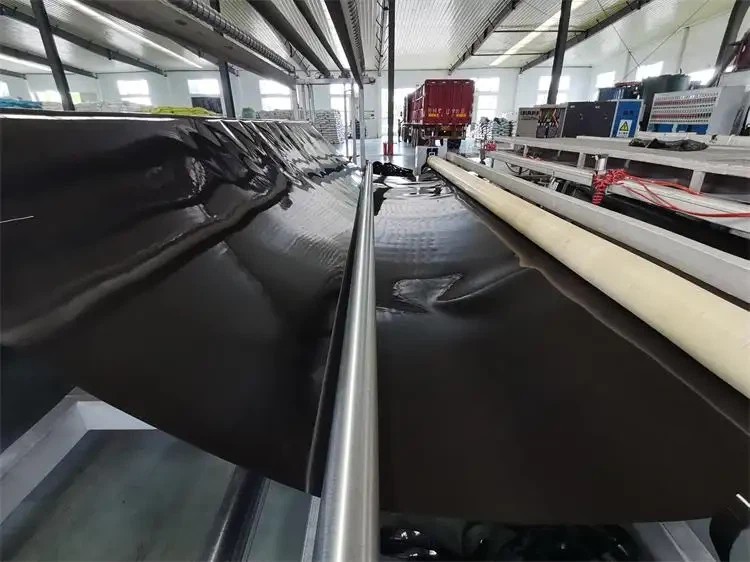
To contain the biogas and prevent methane leakage into the environment, PVC geomembrane was chosen for the lagoon lining system. The goal was to line an area of 10,000 m² for the biogas containment and to provide environmental protection from waste seepage.
2. Material Specifications
For this biogas project, the following PVC geomembrane specifications were selected:
The 1.0 mm thickness was selected for its balance of flexibility, puncture resistance, and methane gas containment. The black color with UV stabilization ensures that the material remains durable and resistant to UV degradation in Australia's harsh sunlight.
3. Installation Process
Step 1: Site Preparation
Before laying the PVC geomembrane, the site underwent the following preparation steps:
Excavation of the lagoon area to a uniform depth.
Compaction of the soil to create a stable base for the liner.
Removal of sharp objects and debris that could damage the membrane.
Step 2: Geomembrane Deployment
PVC geomembrane rolls were unrolled and laid out carefully over the prepared subgrade.
The sheets were overlapped by 10–15 cm, ensuring a secure join for the hot-air welding process.
Step 3: Welding and Seaming
Hot-air welding was used for long seams to create continuous, leak-proof connections.
Extrusion welding was applied at corners, junctions, and penetrations for additional strength.
All welds were tested through pressure testing, vacuum box testing, and spark testing to confirm their integrity.
Step 4: Anchor Trench and Slope Stabilization
Anchor trenches were excavated along the perimeter of the geomembrane to ensure it would stay in place under hydrostatic pressure from biogas buildup.
The edges were backfilled with soil and compacted to secure the liner against shifting.
4. Performance Testing and Quality Control
Throughout the installation process, extensive quality control measures were implemented:
Tensile strength testing to ensure the geomembrane could withstand stresses during installation and under operational conditions.
Elongation at break testing to assess the material's ability to stretch without cracking.
Seam strength testing using peel and shear tests.
Leak detection tests using spark testing and vacuum testing to ensure all seams were leak-free.
All tests were conducted according to ASTM and GRI standards, and the PVC geomembrane exceeded the project's performance requirements.
5. Project Outcomes and Benefits
After installation, the PVC geomembrane successfully met the biogas lagoon's containment and protection requirements. The key outcomes included:
Effective biogas containment: The geomembrane provided a secure barrier to trap methane gas and prevent leakage.
Long-term durability: The UV stabilization of the PVC geomembrane ensured that the material remained intact despite prolonged exposure to sunlight in Queensland's intense climate.
Chemical resistance: The geomembrane was resistant to the acids and chemicals typically found in organic waste, ensuring long-term environmental safety.
Cost-effectiveness: Compared to other lining systems like concrete or HDPE, the PVC geomembrane was a more economical option, reducing both installation costs and maintenance needs.
6. Environmental and Operational Benefits
The use of PVC geomembrane for biogas containment provided significant environmental protection and operational efficiency:
Prevention of methane leakage: The geomembrane ensured that methane was captured and stored safely, reducing environmental impact.
Water conservation: By preventing contamination of surrounding soil and water with waste, the PVC liner helped preserve natural water resources.
Sustainability: The PVC geomembrane's recyclability and long lifespan contribute to more sustainable and environmentally friendly biogas production practices.
7. Conclusion
The successful installation of PVC geomembrane in the biogas lagoon project in Australia showcases the material's reliability, durability, and cost-effectiveness for environmental containment. Whether for biogas production, wastewater treatment, or chemical containment, PVC geomembrane provides an excellent solution for renewable energy projects and environmental protection.
As PVC geomembrane continues to evolve, it remains a top choice for sustainable infrastructure solutions, especially in renewable energy and waste management applications.