
1. Introduction: Why the Right Geomembrana Matters
In the field of modern civil and environmental engineering, geomembranas are the invisible barrier systems that keep water, chemicals, and waste where they belong. They are indispensable in waterproofing, containment, and pollution control.
Among the various types of geomembranas, PVC (Polyvinyl Chloride) and HDPE (High-Density Polyethylene) dominate the global market. Both act as impermeable liners, but they behave quite differently in terms of mechanical strength, flexibility, and field performance.
Understanding these differences is critical when selecting a reliable waterproofing solution for your project - whether you're designing a landfill, a reservoir, or an aquaculture pond.
As a leading China geomembrana manufacturer, we've prepared this guide to help you make a practical and informed decision between PVC geomembrana and HDPE geomembrana.
2. What Is a Geomembrana?
A geomembrana is a synthetic polymer sheet designed to create a barrier that prevents liquid or gas migration. Because of its extremely low permeability, it is widely used in containment and waterproofing systems.
Applications include:
Reservoirs, canals, and irrigation ponds
Wastewater treatment plants
Landfills and leachate ponds
Mining tailings containment
Tunnels, basements, and green roofs
In simple terms, a geomembrana functions as the last defense layer between the environment and the material it isolates.
3. PVC Geomembrana Overview
PVC geomembrana is a flexible plastic liner made from polyvinyl chloride resin combined with plasticizers, stabilizers, and UV absorbers.
Its main features include:
Excellent flexibility and elongation
Easy field welding
Adaptability to irregular surfaces
Reliable performance under moderate temperatures
PVC geomembranas are typically calendered or extruded, producing a smooth, uniform finish.
They are ideal for tunnels, basements, decorative ponds, and waterproofing layers in construction.
Technical data (typical range):
Tensile strength: 12–20 MPa
Elongation at break: ≥250%
Working temperature: –25°C to +60°C
Thickness: 0.5–2.0 mm
Because of their soft texture and easy handling, PVC geomembranas are often favored for projects that demand flexibility and precise installation.
4. HDPE Geomembrana Overview
HDPE geomembrana is made from high-density polyethylene, a harder and more rigid polymer known for chemical stability and resistance to UV degradation.
It performs exceptionally well in harsh outdoor environments, such as landfills, mining operations, and industrial containment systems.
Technical data (typical range):
Tensile strength: 20–30 MPa
Elongation at break: 500–700%
Working temperature: –40°C to +80°C
Thickness: 0.5–3.0 mm
HDPE geomembranas are typically manufactured through blown film extrusion.
While they are less flexible than PVC, their long-term durability and chemical resistance make them the preferred option for permanent containment projects.
5. Material Composition Comparison
The difference lies mainly in molecular structure.
PVC contains polar molecules, which make it more elastic and responsive to additives.
HDPE is non-polar, resulting in stronger chemical stability and higher rigidity.
6. Physical and Mechanical Properties
In short:
PVC geomembrana = flexibility and installation efficiency
HDPE geomembrana = long-term toughness and chemical endurance
7. Chemical Resistance
PVC's softer matrix makes it slightly more vulnerable to hydrocarbons, while HDPE's dense, non-polar structure provides exceptional chemical resistance - ideal for industrial or landfill settings.
8. Installation and Field Performance
Installation efficiency often determines real-world performance more than lab results.
PVC geomembrana:
Lightweight and flexible
Conforms easily to uneven terrain
Weldable with hot air or chemical solvents
Simple to repair with patches
Ideal for sites with limited space or irregular shapes
HDPE geomembrana:
Requires higher welding temperature (around 300–450°C)
Needs specialized welding machines and certified technicians
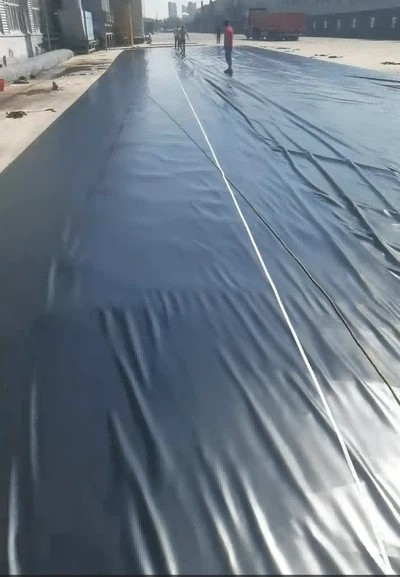
Best suited for flat, large-scale projects
Very strong seams when welded correctly
? Professional Tip:
For small or medium-sized containment projects, PVC geomembranas often save 30–40% in installation time and labor cost compared to HDPE.
9. Application Comparison
PVC geomembranas shine in flexible, confined, or architectural waterproofing uses, while HDPE dominates large outdoor containment.
10. Economic and Environmental Aspects
PVC is generally more economical for projects requiring frequent detailing or irregular shapes, while HDPE offers better lifetime cost efficiency in long-term containment systems.
11. How to Choose Between PVC and HDPE Geomembranas
Choosing the right geomembrana depends on terrain, chemical exposure, project duration, and climate.
✅ Simple rule of thumb:
Choose PVC geomembrana for flexibility and easy installation.
Choose HDPE geomembrana for chemical resistance and longevity.
12. The Advantage of China Geomembrana Manufacturers
China has become a global leader in the production and export of PVC and HDPE geomembranas, thanks to its modern manufacturing facilities, strict quality control, and international certifications (ISO, ASTM, CE).
A China geomembrana manufacturer can offer:
Full product range (0.3 mm–3.0 mm thickness)
Smooth or textured surfaces
PVC, HDPE, EVA, and composite types
Custom colors and roll sizes
Technical support for welding and onsite installation
By integrating cost efficiency with quality assurance, Chinese suppliers have earned a reputation for delivering reliable geomembranas to hydraulic, mining, and environmental projects worldwide.
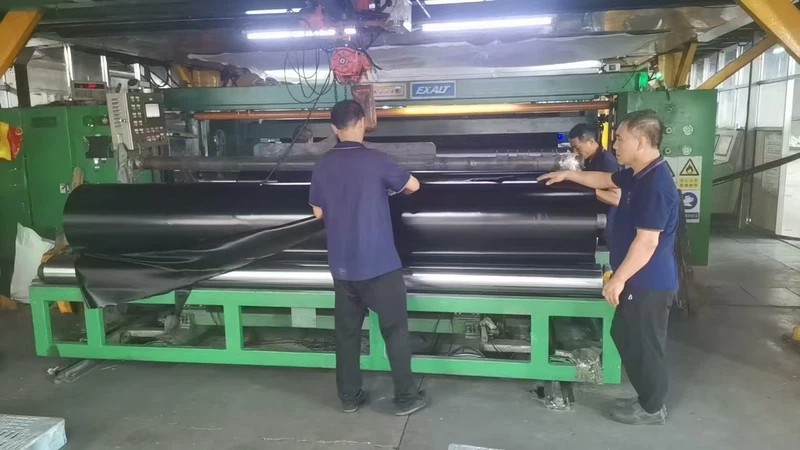
Our production lines use precision calendering and extrusion equipment, ensuring consistent film thickness, high tensile strength, and perfect seam compatibility.
From waterproofing liners to composite geomembranas reinforced with geotextiles, every product is engineered to meet or exceed global performance standards.
13. Conclusion
Both PVC geomembrana and HDPE geomembrana serve the same goal - creating a durable, impermeable barrier that protects the environment and infrastructure.
The real difference lies in their mechanical behavior and application focus.
PVC geomembrana: flexible, easy to install, suitable for complex or confined spaces.
HDPE geomembrana: strong, chemical-resistant, built for large-scale, long-term containment.
Choosing the right one ensures structural safety, environmental protection, and economic efficiency.
With decades of production experience, China geomembrana manufacturers continue to supply global projects with advanced, high-quality solutions that balance durability and affordability.
? Whether your project involves a reservoir, a landfill, or a mining operation, the right geomembrana liner is the foundation of success - and that's where professional materials and expertise from China make a difference.