
Geocells are easy-to-install foundation grids for any outdoor construction project. They are made up of three-dimensional cellular structures designed to add strength and increase load-bearing capacity for your project.
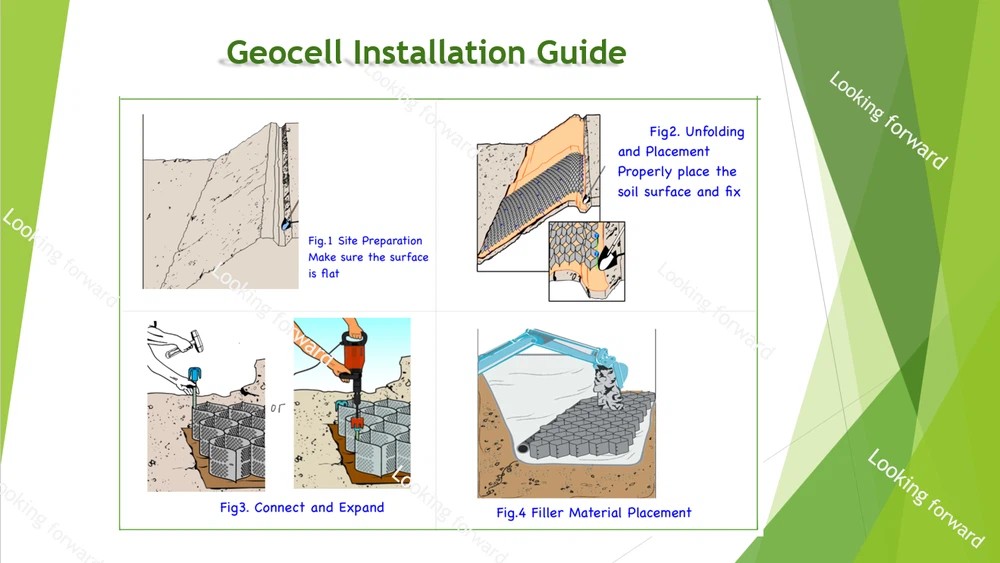
Geocell Installation Guide :
1. Site preparation
Proper site preparation is the first step and essential for a successful geocell installation. Before installing the HDPE geocell, any debris, rocks, and vegetation should be removed from the site. The soil should also be excavated to the required depth and the surface properly leveled to ensure that the foundation is firm and stable. The use of geotextiles on the soil surface will further improve soil stability and prevent erosion.
2. Geocell unfolding and placement
Once the site is properly prepared, unfold the geoweb and place it on the soil surface. Make sure that the surface is placed in the correct orientation so that the geocell is perpendicular to the direction of the expected load. Properly aligning surfaces is essential to ensure a continuous surface. Don't forget to use metal stakes, ground anchors, or other fastening methods to hold the surface in place.
3. Connect and Expand
To ensure optimal performance, geocells must be properly connected and extended. The skin should be attached using the methods recommended by the manufacturer, which may include hot melt, mechanical joining, or adhesive bonding. The surface should also be extended to the desired height using manual or mechanical extension techniques.
4. Filler material placement
Placing filler material in the geocell is one of the most critical steps in the installation process. The filler material should be placed in batches, and each batch of material should be compacted before placing the next batch. Make sure that the filling material is free of debris, rocks, and other harmful substances that could damage the skin of the geocell. It is also important to ensure that the filling material is evenly distributed throughout the geocell structure to prevent voids and uneven settlement.
5. Quality control and inspection
Quality control and inspection are prerequisites to ensure a successful geocell installation. It is best to have a qualified inspector to supervise the installation process to ensure that each step is performed correctly and meets all quality standards. Any problems that arise during installation, such as surface damage or improper connections, should be addressed promptly to avoid preventing further problems in the future.
6. Maintenance and Repair
Proper maintenance and repairs can help extend the life of your geocell and ensure its optimal performance. The surface of the geocell should be inspected regularly for any damage, such as cracks or perforations, and any issues should be repaired immediately. The filler material should also be inspected regularly to ensure that it is evenly distributed and properly compacted.
Notes :
1. The hole position of the anchor rod must be located above the diagonal of the geocell to ensure that the weight of the geocell can be transmitted to the anchor.
2. The geoweb must be completely connected with each other to form a piece and form a whole.
3. Build a waterproof ridge on the top of the slope to prevent the water flow from scouring the geoweb and dredge the drainage in time.